
The Great Schism of 1054
The break of communion between the churches of Rome and Constantinople that divided Christianity into its Catholic and Orthodox branches. Rooted in disputes over papal authority, the Filioque clause, liturgy, and the political rivalry of the Greek East and Latin West, the division hardened through the Crusades and has never been formally healed, despite the lifting of the 1054 excommunications in 1965.
Events
Charlemagne Crowned Emperor of the Romans

Pope Leo III crowned Charlemagne as emperor of the Romans in St. Peter's Basilica, creating a western imperial title that Constantinople regarded as a usurpation of the Byzantine emperor's status. The coronation entrenched two rival claims to Roman legitimacy and set the Greek East and Latin West on diverging political paths. Byzantine emperors did not recognize the title for decades.
Location: Rome, Papal States
The Photian Schism and the Fourth Council of Constantinople

Latin delegates at the council called by Pope Adrian II anathematized Patriarch Photius of Constantinople, whom Rome had earlier supported in a rival succession dispute. The East never recognized this council as ecumenical, counting instead a later 879–880 council that reinstated Photius. The affair first exposed the depth of disagreement over papal authority in the East.
Location: Constantinople, Byzantine Empire
The Filioque Adopted in Rome's Liturgy

At the coronation of Emperor Henry II in Rome, the Filioque clause — the addition of "and the Son" to the Nicene Creed's description of the Holy Spirit's procession — was sung for the first time in a papal liturgy. Constantinople objected to any unilateral alteration of the creed agreed by ecumenical councils. The clause became the most cited theological difference between the two churches.
Location: Rome, Papal States
Cerularius Closes the Latin Churches
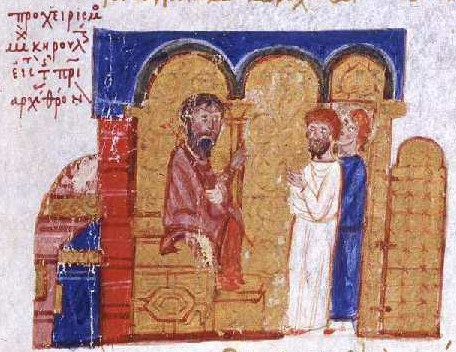
Patriarch Michael I Cerularius ordered the closure of Latin-rite churches in Constantinople in retaliation for Norman pressure on Greek communities in southern Italy and Western criticism of Eastern liturgical customs. Leo of Ohrid, with Cerularius's support, circulated a letter attacking the Western use of unleavened bread in the Eucharist. The moves escalated a dispute already simmering between the sees.
Location: Constantinople, Byzantine Empire
Mutual Excommunications in Hagia Sophia

Cardinal Humbert of Silva Candida, leading a papal legation, laid a bull of excommunication against Cerularius on the altar of Hagia Sophia after negotiations failed over papal primacy and Cerularius's title of ecumenical patriarch. Cerularius responded by excommunicating the legates. The act's validity has been questioned ever since, because Pope Leo IX had died in April 1054 and Cerularius's sentence applied only to the legates personally — yet the date became the conventional marker of the schism.
Location: Constantinople, Byzantine Empire
The First Crusade Deepens the Divide
Pope Urban II called the First Crusade at the Council of Clermont to aid Byzantine Emperor Alexios I against the Seljuk Turks. Western armies marching through Byzantine territory created friction over authority and plunder, and the crusading movement sharpened the sense of two separate Christian worlds. Each subsequent crusade strained relations further.
Location: Clermont, France
The Fourth Crusade Sacks Constantinople
Crusader armies diverted from Palestine captured and sacked Constantinople, installing a Latin emperor and a Roman patriarch in the city for six decades. Orthodox chroniclers recorded the desecration of Hagia Sophia and the looting of relics. Many historians identify this rupture, more than 1054, as the point at which the break in communion became irreparable, and some date the schism itself to 1204.
Location: Constantinople, Byzantine Empire
The Union of Florence Repudiated
Facing Ottoman military pressure, a Byzantine delegation at the Council of Florence signed a decree of union with Rome accepting papal primacy and the Filioque. The union was never accepted by the Orthodox clergy and faithful of Constantinople, and was formally repudiated after the city's fall in 1453. The episode demonstrated that political necessity could not override the accumulated division.
Location: Florence, Republic of Florence
The 1054 Excommunications Lifted
Pope Paul VI and Ecumenical Patriarch Athenagoras I jointly declared the excommunications of 1054 removed "from the memory and from the midst of the Church," read simultaneously at the Second Vatican Council in Rome and in Istanbul. The declaration did not restore communion, but it opened the modern era of Catholic–Orthodox dialogue. Both churches later established joint commissions for theological talks.
Location: Rome, Italy and Istanbul, Turkey
First Meeting of a Pope and Moscow Patriarch
Pope Francis and Patriarch Kirill of Moscow met at Havana airport and signed a joint declaration — the first meeting in history between a Roman pope and a Russian Orthodox patriarch. The declaration addressed persecution of Christians in the Middle East, family values, and secularization. The choice of Cuba reflected the need for neutral ground outside both churches' territories.
Location: Havana, Cuba
Francis and Kirill Speak on the Ukraine War
Pope Francis and Patriarch Kirill held a video call on the Russian invasion of Ukraine, their first known contact since the war began. Francis rejected framing the war in religious terms, saying the church "uses the language of Jesus, not of politics." The exchange highlighted how the East–West religious divide had become entangled with a new geopolitical confrontation.
Location: Vatican City and Moscow, Russia