
The Great Irish Famine (1845-1852)
The Great Irish Famine was a period of mass starvation, disease, and emigration in Ireland between 1845 and 1852, triggered by potato blight but deepened by British government policy, land tenure systems, and economic doctrines. Approximately one million people died and over one million emigrated, reducing Ireland's population by 20-25 percent and permanently altering the country's demographic, political, and cultural landscape.
Events
Potato Blight Arrives in Ireland

Potato blight (Phytophthora infestans) was first reported in Ireland on September 13, 1845. The disease had appeared in North America in 1843 and spread across Europe through 1844-1845. The Gardeners' Chronicle reported crops near Dublin suddenly perishing, asking "where will Ireland be in the event of a universal potato rot?" By mid-November, the Scientific Commission reported that half the potato crop had been destroyed. The British Prime Minister Sir Robert Peel ordered the secret purchase of 100,000 pounds sterling worth of Indian corn from America for distribution in Ireland.
Peel's Relief Efforts and the Repeal of the Corn Laws

Prime Minister Peel convened an emergency Cabinet meeting on October 31, 1845, proposing a Relief Commission for Ireland and public funds for food purchases. Peel argued that addressing the famine required repealing the Corn Laws — tariffs on imported grain that kept bread prices high. The Cabinet split, but after Peel's temporary resignation and reinstatement, the Corn Laws were repealed in June 1846. The repeal split the Conservative Party and Peel resigned, but it opened Britain to free trade in grain. The Relief Commission distributed food, though the supply was limited by the secret purchase system.
New Whig Government Halts Food Relief
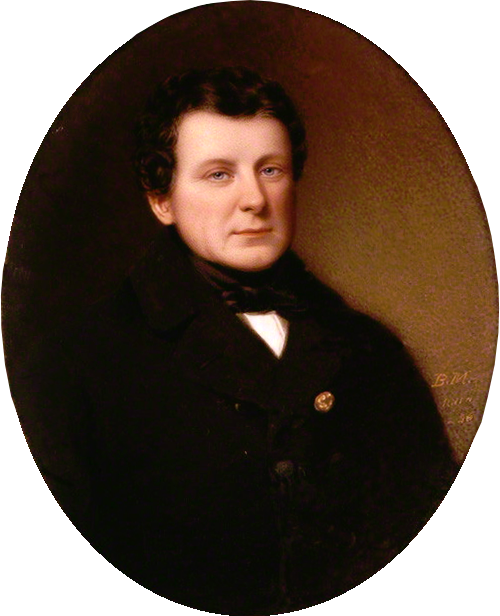
Lord John Russell's new Whig administration took power and, guided by laissez-faire economic principles, halted government food relief and public works programs. The new policy held that the market would naturally provide food and that government intervention distorted prices. The sudden withdrawal of relief left hundreds of thousands of people without work, money, or food. Grain and livestock continued to be exported from Ireland to Britain throughout the famine — a fact that became a source of lasting controversy. Private initiatives, notably the Central Relief Committee of the Society of Friends (Quakers), attempted to fill the gap.
The 1846 Crop Totally Destroyed

The potato blight returned with greater intensity in 1846, destroying nearly the entire crop. Unlike 1845 when about half the crop was lost, the 1846 harvest was virtually total loss. Starvation and disease began to spread rapidly. The British government resumed relief works, but bureaucratic delays slowed the release of food supplies. By December 1846, approximately 500,000 destitute people were employed in public works projects such as road building, but wages were insufficient and the work physically drained already starving laborers. The soup kitchen system, run by charities and the government, became the main source of food for millions.
Black '47 — The Worst Year of the Famine

The year 1847, known as "Black '47," was the worst year of the famine. An estimated 400,000 people died from starvation and famine-related diseases including typhus, relapsing fever, and dysentery. The British government shifted relief policy from public works to direct soup kitchen distribution and established the Temporary Relief Act (Soup Kitchen Act), feeding about three million people daily at its peak. However, the Poor Law Amendment Act (the "Gregory Clause") barred anyone holding more than one-quarter acre of land from receiving workhouse relief, forcing tens of thousands of impoverished tenant farmers to surrender their land to access aid. Mass evictions followed.
Mass Emigration and the Irish Diaspora
Over one million people emigrated during the famine years, with the peak in 1847. Emigrants fled through overcrowded ships known as "coffin ships" due to high mortality rates — an estimated 15-30 percent of passengers died during or shortly after the Atlantic crossing. The largest destinations were the United States (especially New York, Boston, and Philadelphia), Canada (receiving ships to quarantine stations like Grosse Isle), Britain, and Australia. The Irish diaspora transformed the demographic and political landscape of the receiving countries. Canada's Grosse Isle quarantine station alone recorded over 5,000 Irish immigrant deaths in 1847.
The Young Irelander Rebellion of 1848
Inspired by the European Revolutions of 1848, the Young Ireland movement, led by William Smith O'Brien, launched a rebellion against British rule in Ireland. The revolt was poorly planned and quickly suppressed at the Battle of Widow McCormack's House in Ballingarry, County Tipperary. The failure of the rebellion demonstrated the difficulty of organizing armed resistance during a famine when the population was starving and demoralized. The leaders were arrested, convicted of high treason, and sentenced to death, though the sentences were commuted to transportation to Australia. The rebellion deepened the tradition of Irish revolutionary nationalism.
The Encumbered Estates Act and Land Reform
The British government passed the Encumbered Estates Act to facilitate the sale of bankrupt Irish estates and encourage investment. Between 1849 and 1858, over 3,000 estates covering more than 5 million acres (approximately 2 million hectares) changed hands. The act accelerated the decline of the old landed gentry and the rise of a new class of commercial landlords, but did little for the tenant farmers who were often evicted. The famine had already caused an estimated 500,000 permanent evictions. The Land War of the 1870s-1880s emerged directly from famine-era grievances about tenancy and eviction.
Famine Ends and Demographic Collapse
By 1852, the potato blight subsided and the famine period ended. The human toll was catastrophic: approximately one million people had died from starvation and disease, and over one million had emigrated. Ireland's population fell from approximately 8.5 million before the famine to about 6.5 million by 1851, and continued to decline through emigration, reaching 4.4 million by 1901. The famine permanently ended the system of subdivision of landholdings, accelerated the shift from tillage to pasture, and entrenched the dominance of the English language in Ireland as the Irish-speaking areas of the west were most devastated.