
The Great Fire of London (1666)
The four-day fire that destroyed the medieval City of London in September 1666, killing the old timber city and producing the brick-built capital, modern building regulation, fire insurance, and Christopher Wren's cathedral skyline.
Events
The Fire Begins on Pudding Lane

Shortly after midnight on Sunday 2 September 1666, a fire broke out in the bakery of Thomas Farriner on Pudding Lane. Sparks from the furnace are the most commonly cited cause, though the exact origin was never established. The city had endured a long, dry summer, and timber-framed houses stacked close together allowed the flames to spread quickly.
Location: London, England
The Fire Spreads West as Demolition Firebreaks Fail

Driven by an easterly wind, the fire spread westward faster than the city's manual firefighting could contain. Lord Mayor Thomas Bludworth ordered houses pulled down to create firebreaks, but the demolitions lagged behind the flames and were too limited to halt the advance. By Monday, the fire had become a city-wide conflagration.
Location: City of London, England
Old St Paul's Cathedral Burns

By Tuesday the fire reached its height. Old St Paul's Cathedral, the medieval church that had sheltered Londoners and their goods, caught fire; its lead roof melted and its stones cracked. Flames threatened the Tower of London until firebreak demolitions at the river finally shielded it.
Location: London, England
The Fire Dies Out at Temple

On Wednesday 5 September the wind eased and firebreaks made at Temple and the river checked the flames. The fire had burned an area of some 436 acres (about 176 hectares), consuming roughly 13,000 houses, 87 parish churches, and most of the city's civic buildings. The verified official death toll recorded six people, though historians have long debated whether the true count was higher, given the poor records of the city's poorer districts.
Location: London, England
Scapegoating and the Hanging of Robert Hubert
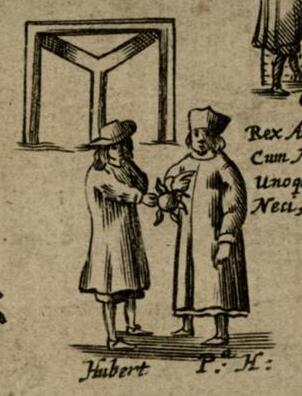
In the fire's aftermath, rumor blamed foreign arsonists, and mobs attacked French and Dutch residents in the city. Robert Hubert, a Frenchman who gave a confession later shown to be false and inconsistent — he was not in London when the fire began — was convicted and hanged at Tyburn. Anti-foreign and anti-Catholic suspicion shaped public accounts of the fire for years.
Location: Tyburn, London, England
The Rebuilding of London Act Mandates Brick and Stone

Parliament passed the Rebuilding of London Act in February 1667, requiring new buildings in the City to be constructed of brick or stone, limiting the number of storeys, widening streets, and funding reconstruction through a coal tax. Rival master plans by Christopher Wren, John Evelyn, and Robert Hooke for a redesigned grid city were set aside in favor of rebuilding on the old street pattern.
Location: Westminster, England
The Monument Is Erected

A memorial column designed by Christopher Wren and Robert Hooke was completed in 1677, standing 202 feet (62 meters) from the fire's origin on Pudding Lane — its height matching its distance. The Monument became the city's permanent record of the fire, and its original inscription blamed "popish frenzy," a claim later removed as anti-Catholic propaganda.
Location: London, England
Fire Insurance Becomes an Industry

The Great Fire's scale drove the creation of the first fire insurance office in London in the early 1680s, whose marks on insured buildings — and private fire brigades — introduced the business of underwriting urban fire risk. The fire is widely credited with launching property insurance as an industry.
Location: London, England
Wren's New St Paul's Cathedral Rises

The first service was held in the new St Paul's Cathedral in December 1697, in the unfinished choir of Christopher Wren's replacement building. The cathedral, declared formally complete by Parliament in 1710, defined London's skyline and became the most visible product of the city's post-fire reconstruction.
Location: London, England