
Google DeepMind
British-American AI research laboratory serving as a subsidiary of Alphabet Inc. Founded in 2010, it pioneered reinforcement learning for games and protein folding. Now responsible for Gemini LLMs and other generative AI tools. Headquarters: London, England, UK.
Events
DeepMind Founded
DeepMind was founded by Demis Hassabis, Shane Legg, and Mustafa Suleyman in London, with the goal of creating general-purpose AI through reinforcement learning approaches.
Acquired by Google

Google acquired DeepMind for a reported $400-$650 million, making it a subsidiary while retaining its London headquarters and research autonomy.
AlphaGo Defeats Lee Sedol
AlphaGo defeated world champion Lee Sedol 4-1 in a five-game Go match, a landmark moment in AI history. This was the first time an AI defeated a professional Go player at the highest level.
WaveNet Neural Vocoder Published
DeepMind published WaveNet, a deep generative model for raw audio waveforms that produced state-of-the-art text-to-speech quality. WaveNet's autoregressive approach to audio generation became the foundation for Google Assistant voices and influenced the entire field of neural audio synthesis.
AlphaGo Zero Masters Go Without Human Knowledge
DeepMind published AlphaGo Zero, a version of AlphaGo that learned to play Go entirely through self-play without any human game data. Starting from random play, it surpassed all previous versions within 40 days, demonstrating that reinforcement learning from scratch could surpass human expert knowledge in complex domains.
AlphaStar Reaches Grandmaster Level in StarCraft II
DeepMind published AlphaStar, an AI system that achieved Grandmaster rank in StarCraft II, a real-time strategy game with imperfect information. AlphaStar combined deep reinforcement learning with multi-agent training to master one of gaming's most complex benchmarks, advancing AI research in long-horizon planning.
AlphaFold Solves Protein Folding

DeepMind's AlphaFold achieved accuracy comparable to laboratory techniques in predicting protein structures, solving a 50-year-old grand challenge in biology at the CASP14 competition.
AlphaFold Database Released with 200M Protein Structures

DeepMind released predictions for over 200 million protein structures, representing virtually all known proteins, on the AlphaFold database, freely available to the global scientific community.
Merger with Google Brain to Form Google DeepMind

DeepMind merged with Google AI's Google Brain division to form Google DeepMind, consolidating Google's AI research in response to OpenAI's ChatGPT success.
Gemini LLM Released
Google DeepMind released Gemini, a multimodal large language model in three sizes (Nano, Pro, Ultra), positioned as the successor to LaMDA and PaLM and designed to challenge OpenAI's GPT-4.
Gemini 1.5 Pro with Million-Token Context Window Released
Google DeepMind released Gemini 1.5 Pro, featuring a breakthrough one-million token context window using Mixture-of-Experts architecture. The model could process entire books, codebases, and long video sequences in a single pass, fundamentally expanding the boundaries of what LLMs could comprehend.
AlphaFold 3 Published with Biomolecular Interaction Predictions
Google DeepMind and Isomorphic Labs published AlphaFold 3, dramatically expanding protein structure prediction to model interactions between proteins, DNA, RNA, and small molecules. The model enabled unprecedented accuracy in drug discovery and molecular biology research, building on the Nobel-winning AlphaFold 2.
Veo AI Video Generation Model Unveiled
Google DeepMind unveiled Veo, a generative video model capable of producing high-quality 1080p videos from text and image prompts. Veo demonstrated advanced understanding of real-world physics and motion, positioning Google as a direct competitor to OpenAI's Sora in the AI video generation space.
Nobel Prize in Chemistry for AlphaFold
Demis Hassabis and John Jumper received half of the 2024 Nobel Prize in Chemistry for AlphaFold2's protein structure prediction achievement, cementing DeepMind's scientific impact.
Gemini 2.0 Flash Launch — The Agentic Era
Google DeepMind introduced Gemini 2.0, a new AI model designed for the 'agentic era' with native image and audio output, native tool use, and a new Multimodal Live API. Gemini 2.0 Flash was made available to developers and trusted testers, marking a major architectural shift toward agentic capabilities.
Gemini 2.5 Pro Release — Thinking Model
Google DeepMind released Gemini 2.5 Pro Experimental, its first 'thinking model' designed to tackle complex problems with reasoning over code, math, and STEM. The model led common benchmarks by meaningful margins and featured a 1M token context window, establishing Gemini as a top-tier reasoning model.
Google DeepMind releases Gemini 3, taking the frontier-model lead
Google DeepMind released Gemini 3, its most capable model, which topped the LMArena leaderboard on release and marked the first time Google unambiguously claimed the frontier model lead. Gemini 3 shipped with an expanded context window, native tool use, and Deep Think mode for complex reasoning, and was deployed across Google Search, Workspace, and the Gemini app within days.
Gemini 3.5 Flash Launch at Google I/O 2026
Google launched Gemini 3.5 Flash to general availability at Google I/O 2026, the first Flash-tier model to outscore the previous Pro flagship (Gemini 3.1 Pro) on agentic coding benchmarks. Priced at $1.50/$9.00 per million tokens with a 1M context window, it represented a major leap in cost-effective frontier performance.
Google DeepMind Launches Gemini 3.6 Flash, 3.5 Flash-Lite, and 3.5 Flash Cyber
Google DeepMind released three new models: Gemini 3.6 Flash (next-generation model with improved token efficiency and latency), Gemini 3.5 Flash-Lite (lightweight model for cost-sensitive deployments), and Gemini 3.5 Flash Cyber (specialized cybersecurity model fine-tuned for vulnerability discovery and patching, available via limited-access pilot).
Google DeepMind disbands Nobel-winning AlphaFold team, shifts to Gemini
Google DeepMind dismantled the core team behind AlphaFold, its Nobel Prize-winning AI system for predicting protein structures, as the company overhauled its research strategy toward Gemini-led AI programs. Most team members were reassigned to other projects, some moved to Isomorphic Labs, and several key contributors including Nobel laureate John Jumper defected to Anthropic. The move marks a significant strategic shift away from specialized scientific AI toward general-purpose foundation models.
Google DeepMind Launches Gemini Robotics 2 with Whole-Body Intelligence

Google DeepMind released Gemini Robotics 2, a major advance in embodied AI featuring whole-body control from feet to fingertips, fine dexterity through 22-degree-of-freedom hands, multi-robot collaboration, and on-device adaptation to new robot bodies in just hours. The system includes three models: Gemini Robotics 2 (vision-language-action), Gemini Robotics ER 2 (embodied reasoning for multi-step tasks), and Gemini Robotics On-Device 2. Robots can now walk, crouch, manipulate objects, clean rooms, and coordinate with other robots autonomously.
Google DeepMind Leadership Reshuffle — Hassabis Steps Back, Jeff Dean Departs After 27 Years
Demis Hassabis steps down as Google DeepMind CEO to become Chairman and Alphabet Chief Scientist. Koray Kavukcuoglu becomes SVP, reporting to Sundar Pichai. Jeff Dean, Sanjay Ghemawat, Oriol Vinyals, and Quoc Le leave Google to found Discovery Loop, an automated research startup backed by Khosla Ventures, Radical Ventures, and Alphabet. The restructuring ends the three-year Brain/DeepMind two-continent split; Sebastian Borgeaud's coding team relocates from London to Mountain View. Gemini 3.5 Pro reported months behind schedule. Alphabet shares fell more than 5% on the news.
WeatherNext Cyclones Published in Nature with Breakthrough Forecasting Accuracy
On August 6, 2026, Google DeepMind published WeatherNext Cyclones in Nature, an AI operational weather model achieving state-of-the-art accuracy in predicting tropical cyclone track, intensity, and wind structure. The system provides an extra day of warning, delivering three-day cyclone forecasts matching the accuracy previously achieved at two days. Google DeepMind open-sourced the model for meteorological research.
Google DeepMind Releases Gemini 3.8 Flash and Gated Flash Cyber via Fairwind Program
Google DeepMind launched Gemini 3.8 Flash, its best reasoning and coding model at the Flash price point, alongside Gemini 3.8 Flash Cyber -- a cyber-defense variant whose prioritized access is restricted to governments, critical-infrastructure operators and trusted software maintainers through the new limited-access Fairwind Program. The move mirrors the industry-wide shift toward gated access for frontier cyber capabilities, following OpenAI's Daybreak tiers and Anthropic's Mythos gating.
Google DeepMind Releases AlphaGenome Atlas -- Predictive Map of All 9 Billion Human DNA Variants
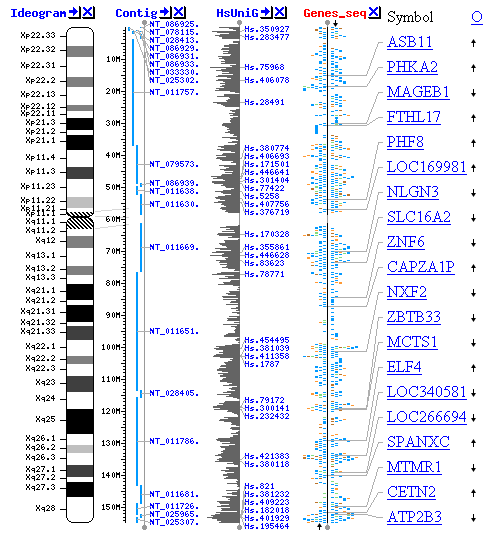
DeepMind published AlphaGenome Atlas, a free platform containing precomputed molecular-effect predictions for all 9 billion possible single-letter DNA changes in the human genome -- a 1-petabyte resource more than 30 times larger than the AlphaFold database. Alongside it, DeepMind released the AlphaGenome Variant Impact (AVI) score, combining AlphaGenome and AlphaMissense to rank variant impact. Trusted external collaborators had already used the atlas to identify and experimentally verify variants in unsolved rare-disease research, extending the AlphaFold lineage into the next grand challenge of genomic interpretation.
Google DeepMind Ships Gemini 3.8 Live -- Takes the Speech-to-Speech Lead at Half the Price
Google DeepMind released Gemini 3.8 Live and 3.8 Live Extended Thinking, native speech-to-speech models for real-time voice agents that process visual input and make API calls across more than 97 languages. The Extended Thinking variant ranked first on the Artificial Analysis Speech-to-Speech Leaderboard, ahead of OpenAI's GPT-Live-1, at roughly USD 1.38 per hour of operation -- less than half the cost. The release ended OpenAI's lead in the voice modality, the last category where it held a clear advantage, and set the price anchor for the emerging voice-agent market.
Google DeepMind Launches DeepMind Institute to Study AGI's Societal Impact
Google DeepMind announced the creation of the DeepMind Institute, a dedicated body to study how artificial general intelligence could reshape society and to widen the public AGI-safety debate beyond industry insiders. Demis Hassabis framed it as a public platform for examining AGI risks and societal consequences, positioning DeepMind's safety agenda institutionally at a moment when rival lab leaders were publicly calling for a development slowdown.