
The Golden Age of Piracy (1650-1730)
A chronicle of the Golden Age of Piracy, the period from the 1650s to the 1730s when maritime piracy significantly shaped trade, colonization, and naval warfare across the Caribbean, the Atlantic, and the Indian Ocean. The era progressed through three phases: buccaneering, the Pirate Round, and the post-Spanish Succession wave.
Events
Buccaneers Establish Tortuga as a Pirate Base
French and English buccaneers, originally hunters of wild cattle on Hispaniola, establish the island of Tortuga as a fortified base for raiding Spanish shipping in the Caribbean. Operating under letters of marque from European powers, the buccaneers target Spanish treasure fleets and colonial settlements. Tortuga becomes the first major pirate haven of the Golden Age.
Henry Morgan Sacks Porto Bello
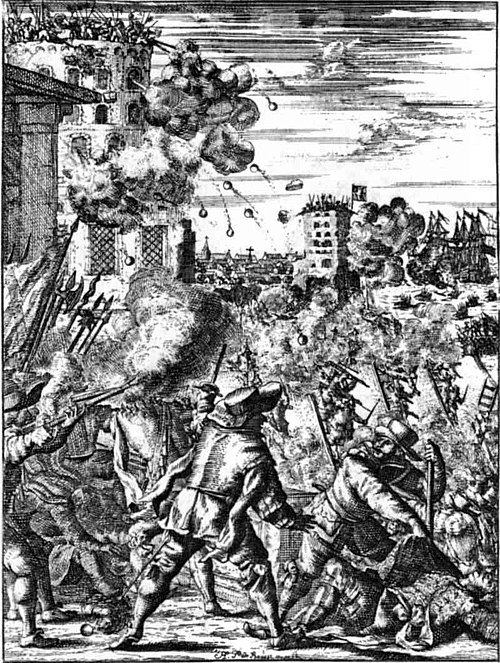
Welsh privateer Henry Morgan leads 450 men in a daring raid on the fortified Spanish city of Porto Bello. Despite being outnumbered, Morgan's forces capture the city and hold it for two weeks, extracting a substantial ransom. The raid humiliates Spanish authority and establishes Morgan as the most feared buccaneer in the Caribbean. He later becomes Lieutenant Governor of Jamaica.
Henry Morgan Crosses the Isthmus and Destroys Panama City

Henry Morgan leads approximately 1,400 men across the Isthmus of Panama through dense jungle to attack Panama City, the wealthiest Spanish colonial city in the Americas. After a fierce battle, Morgan's forces capture and loot the city, which burns down during the fighting. The destruction of Panama City marks the peak of buccaneering power but strains Anglo-Spanish relations and leads to Morgan's arrest (though he is later knighted).
Port Royal Destroyed by Earthquake
A massive earthquake and subsequent tsunami destroy Port Royal, Jamaica, known as the "wickedest city on Earth" and a notorious haven for pirates and privateers. Two-thirds of the city sinks into Kingston Harbour, killing an estimated 5,000 people. The disaster disrupts the buccaneering network and accelerates the shift toward the Pirate Round, as pirates seek new bases in the Indian Ocean.
The Pirate Round — Captures of Mughal Treasure Ships
English pirate Henry Every leads a small fleet in capturing the Ganj-i-Sawai, a Mughal treasure ship carrying vast wealth, near the Mandab Strait. The haul is one of the most lucrative pirate captures in history. Every's crew reportedly tortures passengers and crew. The attack enrages the Mughal Emperor Aurangzeb, who threatens to expel the British East India Company, forcing authorities to crack down on piracy.
The Pirate Republic of Nassau
Following the end of the War of the Spanish Succession, hundreds of unemployed privateers establish a de facto pirate republic in Nassau, Bahamas. The settlement, known as the "Republic of Pirates," operates under a loose code led by captains Benjamin Hornigold and Henry Jennings. From Nassau, pirates including Blackbeard, Charles Vane, and Sam Bellamy launch raids across the Caribbean.
Blackbeard Takes Command of Queen Anne's Revenge
Edward Teach, better known as Blackbeard, captures the French slave ship La Concorde off Martinique and renames her Queen Anne's Revenge, outfitting her with 40 guns and a crew of over 300. Blackbeard's fearsome appearance, with lit slow matches woven into his beard, becomes legendary. He forms a pirate alliance and blockades the port of Charles Town, South Carolina, ransoming its inhabitants.
Woodes Rogers Becomes Governor and Ends the Pirate Republic
Former privateer Woodes Rogers arrives in Nassau as the first Royal Governor of the Bahamas, bringing a royal pardon for pirates who surrender and the king's justice for those who refuse. Rogers offers amnesty; many pirates accept, ending the Republic of Pirates. Those who refuse, including Charles Vane and Blackbeard, are hunted down. Rogers's governorship marks the beginning of the end of the Golden Age.
Blackbeard Killed at the Battle of Ocracoke
Royal Navy Lieutenant Robert Maynard, dispatched by Virginia Governor Alexander Spotswood, engages Blackbeard's sloop Adventure off Ocracoke Island. In a ferocious hand-to-hand battle, Maynard's crew finally kills Blackbeard after he sustains five gunshot wounds and more than twenty sword cuts. Maynard displays Blackbeard's severed head from his bowsprit. The death of Blackbeard symbolically ends the most notorious phase of the Golden Age.
Capture and Execution of Calico Jack Rackham and Anne Bonny
Pirate hunter Jonathan Barnet captures Calico Jack Rackham's sloop off the coast of Jamaica. Rackham is tried and hanged in Port Royal. Two female members of his crew, Anne Bonny and Mary Read, are also captured but escape execution by claiming pregnancy. Their trial becomes a sensation, challenging contemporary gender norms. Rackham's capture is considered the final major act of the Golden Age of Piracy.