
The Basel Convention and the Global Waste Trade
The 1989 Basel Convention created the world's primary legal framework governing the international trade in hazardous waste, seeking to stop wealthy nations from dumping toxic materials on developing countries. Its later amendments on plastics and electronic waste made it central to the modern global struggle over who bears the cost of the world's garbage.
Events
Toxic Waste Goes Global
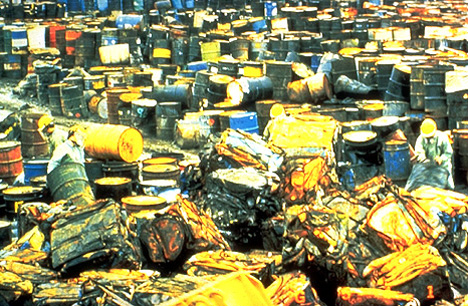
In the 1980s, a series of scandals exposed the export of hazardous waste from industrialized countries to the developing world. The ship Khian Sea, carrying incinerator ash from Philadelphia, spent years wandering the globe searching for a dumping site, leaving thousands of tons on a Haitian beach in 1988 before dumping the rest at sea. Cases like it, alongside Italy's 1988 Koko toxic waste dump in Nigeria, built the political pressure for an international treaty.
Location: Khian Sea, international waters
The Basel Convention Is Adopted

Delegates from 116 countries adopted the Basel Convention on the Control of Transboundary Movements of Hazardous Wastes and Their Disposal on March 22, 1989, under the auspices of the UN Environment Programme. The treaty required exporting states to obtain prior informed consent from importing countries and to minimize waste generation at source. It entered into force on May 5, 1992, and has since grown to nearly universal membership among states.
Location: Basel, Switzerland
The Basel Ban Amendment

Developing countries and environmental groups argued the consent rules legitimized rather than stopped toxic dumping, and in 1994 the parties agreed to ban hazardous waste exports from OECD to non-OECD countries for disposal, formalized as the Basel Ban Amendment in 1995. The ban, driven by the African, Caribbean, and Pacific group and advocacy led by the Basel Action Network, did not take legal effect until 2019, after enough ratifications accumulated, and the United States, a major waste generator, has never ratified the convention itself.
Location: Geneva, Switzerland
The Ivory Coast Toxic Dumping
In August 2006, the ship Probo Koela, operated for the commodities firm Trafigura, offloaded hundreds of tons of toxic slops at Abidjan, where they were dumped at sites around the city. Tens of thousands of Ivorians sought medical treatment and a number of deaths were linked to the waste, prompting criminal cases in multiple countries and a large settlement by Trafigura. The case became the defining example of the harm the Basel regime was built to prevent and forced a global reexamination of waste trafficking enforcement.
Location: Abidjan, Ivory Coast
E-Waste Named the Fastest-Growing Waste Stream
By the 2010s the UN's STEP initiative and the Basel parties had identified electronic waste as the world's fastest-growing waste stream, with tens of millions of metric tons generated annually and large volumes flowing informally to dismantling sites in Ghana, Nigeria, China, and Pakistan despite the export bans. Images of burning circuit boards at Agbogbloshie in Accra became the public face of the illegal waste trade, and the Basel Convention's parties moved to tighten and coordinate enforcement through new technical guidelines adopted at the 2013 Conference of the Parties.
Location: Geneva, Switzerland
China's National Sword Closes the World's Biggest Importer
At the start of 2018, China implemented its National Sword policy, announced in 2017, banning imports of most plastic and mixed paper waste after decades as the world's largest importer of recyclable scrap. The decision, building on the earlier 2013 Green Fence enforcement, stranded millions of tons of Western waste, redirected flows to Southeast Asian countries like Malaysia and Vietnam, and forced exporting nations to invest in domestic processing or send material to landfills, a watershed in global recycling economics.
Location: Beijing, China
The Plastic Waste Amendments
At the 2019 Conference of the Parties in Geneva, 187 countries adopted amendments bringing plastic waste under the Basel Convention's control regime, effective January 1, 2021, requiring exporters to obtain consent from importing states for most contaminated, mixed, or unrecyclable plastics. The amendments followed China's import ban and public outrage over plastic pollution, and marked the first time a major waste category entered global environmental law after the fact rather than being covered from the treaty's start. The United States, outside the convention, faces near-global constraints on its plastic exports.
Location: Geneva, Switzerland