
The Global Housing Crisis
The global housing crisis is a worldwide phenomenon of worsening housing affordability driven by decades of insufficient investment, rapid urbanization, economic instability, the financialization of housing, and climate-related displacement. Up to 3.4 billion people lack access to secure, safe, and adequate housing — making it one of the defining socioeconomic issues of the 21st century.
Events
Housing Recognized as a Human Right (1948/1991)

Article 25 of the Universal Declaration of Human Rights (1948) includes adequate housing as part of the right to an adequate standard of living. The UN Committee on Economic, Social and Cultural Rights (1991) formally clarifies that adequate housing is a human right, setting the international normative framework. Despite this, housing remains aspirational rather than enforceable in most countries.
The US Subprime Mortgage Crisis and Global Financial Crisis (2007-2009)

The collapse of the US housing bubble — driven by predatory lending, subprime mortgages, and mortgage-backed securities — triggers the worst global financial crisis since the Great Depression. Foreclosures displace millions of American households. The crisis exposes the risks of housing financialization and leads to millions losing their homes worldwide.
Housing as an Asset Class — The Rise of Financialization (2010s)

In advanced economies, housing becomes increasingly treated as an investment vehicle rather than shelter. Institutional investors, private equity firms, and foreign buyers purchase large portfolios of single-family homes. Short-term rental platforms like Airbnb transform urban housing stock. House prices decouple from local incomes. The term "housing financialization" enters mainstream discourse.
The Global Housing Deficit Worsens (2010-2023)

According to UN-Habitat, the global housing deficit grows from 251 million units in 2010 to 288 million in 2023. Over one billion people live in informal settlements and slums. Between 2003 and 2023, an estimated 64 million people are forcibly evicted globally with severe consequences for livelihoods, security, and social well-being.
Rapid Urbanization in the Global South (2010s-2020s)
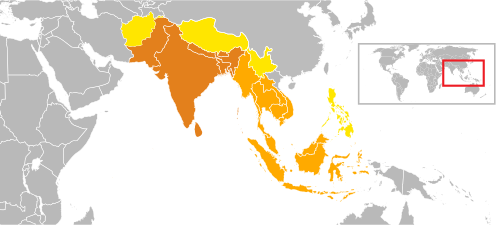
Rapid urbanization across Asia and Africa dramatically outpaces housing construction. Cities in India, Nigeria, Bangladesh, and Indonesia experience explosive population growth with insufficient housing supply. Slum populations expand as cities cannot absorb rural-to-urban migrants. By 2018, the UN reports that 55% of the world's population lives in urban areas, projected to reach 68% by 2050.
The Climate-Housing Nexus (2020s-2026)

The intersection of climate change and housing becomes increasingly urgent. Climate-driven disasters destroy housing: wildfires in California, Australia, and Canada; floods in Pakistan (2022) and Germany (2021); hurricanes in the Caribbean and US Gulf Coast. Insurance costs rise sharply, become unavailable in high-risk areas, or are withdrawn entirely by private insurers — creating an insurance crisis that further strains housing affordability. Building decarbonization policies drive up construction costs but also create opportunities for energy-efficient affordable housing.
The Post-COVID Housing Boom (2020-2022)

Low interest rates, pandemic stimulus, and changing work patterns (remote work) fuel an extraordinary house price surge across the US, UK, Canada, Australia, and Europe. Prices rise 20-40% in many markets. Wealth inequality in housing deepens as property owners benefit from appreciation while renters and first-time buyers fall further behind.
The "Generation Rent" Crisis (2020s)

Homeownership rates among younger cohorts decline to historic lows. In the UK, homeownership for 25-34 year-olds falls from 67% in the 1990s to below 40%. In Canada, it drops from 60% to 43%. Young adults spend a larger share of income on housing than any previous generation, delaying marriage, family formation, and long-term financial planning. "Generation Rent" becomes a defining social category.
Zoning Reform and Policy Experiments (2020s)

Cities and countries experiment with major policy interventions to address the crisis. New Zealand and California legalize denser housing (missing middle, ADUs). Oregon eliminates single-family-only zoning. Scotland and Berlin experiment with rent controls and caps. Canada and New Zealand ban foreign homebuyers. Cities impose empty homes taxes and short-term rental restrictions. Results remain mixed — supply constraints and political opposition limit impact.
Interest Rate Hikes Trigger Mortgage Crisis (2022-2024)

Central banks raise interest rates to combat post-pandemic inflation at the fastest pace in decades. Mortgage payments soar in countries with predominantly variable-rate mortgages (UK, Australia, Canada, Spain, New Zealand). In the UK, over one million households face payment increases exceeding 29%. First-time buyers are priced out as mortgage access tightens.
The Global Rent Crisis (2023-2025)

Rental markets reach crisis levels globally. London rents surge 11%, Toronto 9%, Sydney 12%. Construction of new rental supply plummets due to high financing costs, labor shortages, and material inflation. Vacancy rates hit historic lows. Rent-to-income ratios rise above 30% in most major cities. Rental stress becomes a primary driver of homelessness.
UN-Habitat World Cities Report 2026 (May 2026)

The UN-Habitat World Cities Report 2026 finds that up to 3.4 billion people lack access to secure, safe, and adequate housing, including more than 1 billion living in informal settlements. The report positions adequate housing as a fundamental pillar of sustainable urban development and human well-being, calling for energy-efficient, low-carbon housing solutions and inclusive community-led upgrading.
US Enacts the 21st Century ROAD to Housing Act

On July 11, 2026, the 21st Century ROAD to Housing Act (Public Law 119-101) became law without President Donald Trump's signature, taking effect automatically under the Constitution's ten-day presentment rule after Congress passed it with unusually large bipartisan majorities (Senate 85-5, House 358-32). Described as the most comprehensive rewrite of US federal housing policy in roughly three decades, the law streamlines environmental reviews for housing projects, funds zoning and planning reform grants, expands manufactured and modular housing, and raises community bank investment limits for affordable housing. Its most contested provision - 'Homes Are for People, Not Corporations' - barred large institutional investors (entities controlling 350 or more single-family homes) from purchasing additional single-family homes, with civil penalties of up to 1 million dollars per violation, a first-of-its-kind federal restriction on corporate home buying. The investor ban intensified debate over corporate versus individual homeownership, while skeptics in both parties noted the act authorized no new funds, leaving its impact dependent on later appropriations and implementation.
San Francisco Declares a Rent Emergency (September 2026)

San Francisco Mayor Daniel Lurie declared a citywide rent emergency as rents in the city rose faster than anywhere else in the United States, with the average one-bedroom apartment exceeding 4,300 dollars per month, up more than 1,000 dollars in a year, and more than 1,000 eviction notices filed, on pace for the highest total in nearly a decade. Lurie called for measures to delay evictions of tenants owing less than one month of rent, cap annual increases on rent-controlled units at 10 percent, and fund nonprofit lawyers for tenants facing eviction. The declaration itself was largely symbolic, but it marked a notable escalation of rent-protection policy responses amid an AI-driven economic boom that was rapidly pricing out workers, and it came as housing advocates pressed for emergency powers to accelerate construction rather than only restrain rents.