
The Fukushima Nuclear Disaster (2011)
The accident at the Fukushima Daiichi Nuclear Power Station, where a magnitude 9.0 earthquake and tsunami on 11 March 2011 caused three reactor meltdowns, the second-worst nuclear accident in history. The disaster forced the evacuation of over 160,000 people, prompted a global reassessment of nuclear power, and began a decommissioning effort expected to last decades.
Events
Earthquake and Tsunami Strike the Plant
The Tohoku earthquake off northeast Japan shut down Fukushima Daiichi's reactors automatically, and the tsunami that followed, overtopping a seawall designed for lower waves, flooded the emergency diesel generators. With total station blackout, operators could no longer cool the reactors, and units 1, 2, and 3 began melting down within days.
Location: Okuma and Futaba, Fukushima, Japan
Hydrogen Explosions Rock the Reactor Buildings
Hydrogen released from the damaged Unit 1 reactor exploded on 12 March, blowing apart its building, followed by explosions at Units 3 and 4 over the next three days. Radiation releases forced evacuations that expanded to 20 kilometers (12 miles), while roughly 164,000 residents were eventually displaced.
Location: Fukushima, Japan
Rated Level 7, Equal to Chernobyl

Japan's nuclear safety agency provisionally raised the accident to Level 7, the maximum on the International Nuclear Event Scale, the only accident besides Chernobyl in 1986 to receive the rating. Authorities stressed the total radiation released was a fraction of Chernobyl's, but the classification underscored the severity of the meltdowns.
Location: Tokyo, Japan
Cold Shutdown Declared
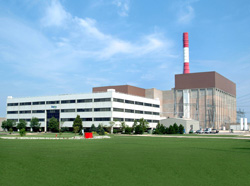
Nine months after the accident, the government declared the damaged reactors in cold shutdown, ending the acute phase of the crisis. Attention shifted to decontamination, temporary storage of contaminated soil across Fukushima prefecture, and the slow return of evacuees to areas outside the most contaminated zones.
Location: Fukushima, Japan
The Diet's Investigation Calls the Accident Man-Made

The Nuclear Accident Independent Investigation Commission, established by the National Diet, concluded the accident was "profoundly a man-made disaster," finding collusion between the operator TEPCO, regulators, and government, with safety reviews deferred for fear of litigation and public concern. The report also criticized evacuation planning that left hospital patients and the elderly exposed.
Location: Tokyo, Japan
Japan Idles Its Entire Nuclear Fleet

With the new Nuclear Regulation Authority enforcing stricter post-Fukushima standards, Japan's last operating reactor was taken offline in September 2013, leaving the country without nuclear power for the first time in half a century. Japan restarted a handful of reactors over the following years under the new rules, while Germany resolved to phase out nuclear entirely by 2022, a decision taken days after the accident.
Location: Japan
Decision to Release Treated Water

After years of storage struggles, with over a million tons of treated water accumulating in tanks at the site, the government decided to release water processed through the ALPS treatment system into the ocean over roughly 30 years. The plan drew opposition from Japanese fishing cooperatives and objections from China and South Korea, while the International Atomic Energy Agency was asked to review the process.
Location: Tokyo, Japan
Ocean Release Begins Under IAEA Review

The controlled discharge of treated water began in August 2023, with the IAEA, which had concluded the plan was consistent with international safety standards, maintaining a continuous presence at the site. China responded by banning Japanese seafood imports, and Japanese fishing groups continued to protest, making the release a continuing diplomatic and economic issue.
Location: Fukushima, Japan