
The FIFA World Cup
The FIFA World Cup, first staged in 1930, grew from a 13-team invitation tournament in Uruguay into the most-watched sporting event on Earth, intertwining football, global media, politics, and national identity across nine decades.
Events
The First World Cup in Uruguay

FIFA staged the first World Cup in Uruguay, with 13 teams entering by invitation and no qualifying round. Host Uruguay defeated Argentina 4-2 in the final at Estadio Centenario before roughly 68,000 spectators, winning the trophy named for FIFA president Jules Rimet. Several European teams declined the long sea journey, an absence that shaped early debates about the tournament's global reach.
Location: Montevideo, Uruguay
The Maracanazo

In the final match of the 1950 tournament, Uruguay drew Brazil in front of an estimated 200,000 spectators at the Maracana, where the hosts needed only a draw to win. Uruguay's 2-1 victory, known as the Maracanazo, became one of the most consequential upsets in sport and a founding trauma of Brazilian football identity. The match resumed the World Cup after a 12-year wartime suspension.
Location: Rio de Janeiro, Brazil
The Miracle of Bern

West Germany defeated the heavily favored Hungary 3-2 in the 1954 final, a result known in Germany as the Miracle of Bern. The tournament remains the highest-scoring in World Cup history at 5.38 goals per match, and Hungary's unbeaten run ended in a final dogged by later controversy over refereeing and doping allegations that were never substantiated. For a rebuilding postwar Germany, the title carried significance far beyond sport.
Location: Bern, Switzerland
A 17-Year-Old Named Pele Wins in Sweden
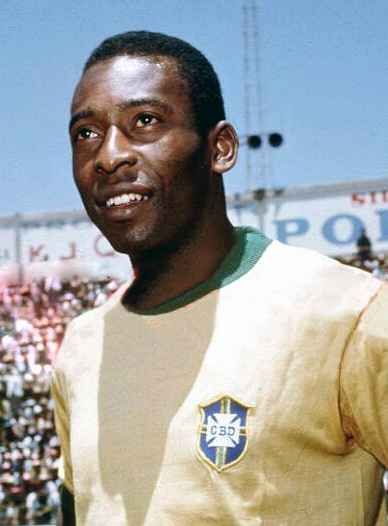
Brazil won its first title in Sweden, with 17-year-old Pele scoring twice in the 5-2 final victory over the hosts. Pele would go on to win three World Cups (1958, 1962, 1970), a record for an individual player that still stands. The tournament also marked the World Cup's first worldwide television audience of significant scale.
Location: Stockholm, Sweden
England Hosts and Wins Amid an African Boycott

England defeated West Germany 4-2 at Wembley, the only time the hosts have won the men's tournament. All fifteen African nations withdrew from qualifying in protest after FIFA refused to guarantee Africa a direct finals place and staged a controversial playoff zone involving North Korea, whom African federations had objected to on anti-apartheid grounds. The boycott forced FIFA to expand finals slots, and Africa received a guaranteed place from 1970.
Location: London, England
Brazil's Third Title and the First Color Broadcast
Brazil beat Italy 4-1 in the 1970 final, becoming the first team to win three titles and earning permanent custody of the Jules Rimet trophy. Mexico 1970 was the first World Cup broadcast worldwide in color via satellite, expanding the tournament's commercial and cultural reach. Pele's performances made him a global icon and, for many observers, the standard by which footballers are still measured.
Location: Mexico City, Mexico
Expansion to 24 Teams

The 1982 tournament in Spain expanded the finals to 24 teams, adding Africa and Asia representation and setting the pattern for the World Cup's growth. Italy won its third title, defeating West Germany 3-1. Expansion reflected both football's global spread and FIFA's commercial ambitions under president Joao Havelange.
Location: Madrid, Spain
Maradona's Hand of God and Goal of the Century

The 1986 tournament moved to Mexico after Colombia withdrew as host, and Diego Maradona delivered its defining moments in a single quarterfinal against England: the unpunished "Hand of God" handball goal and, minutes later, a solo run later voted the Goal of the Century. Argentina beat West Germany in the final. Maradona's duality, rule-breaking and genius, remains central to how the tournament is remembered.
Location: Mexico City, Mexico
Expansion to 32 Teams and France's Title
The 1998 finals in France expanded to 32 teams, the format that persisted until 2026. Hosts France beat Brazil 3-0 in the final. The United States had hosted in 1994 to record total attendance, a tournament that also launched the era of mass global broadcast rights that turned the World Cup into a multi-billion dollar property.
Location: Saint-Denis, France
Africa Hosts for the First Time

South Africa became the first African host of the World Cup, with Spain winning its first title by beating the Netherlands 1-0 through Andres Iniesta's extra-time goal. The tournament was celebrated across Africa as a milestone for the continent's global standing, though some economists also debated the cost of stadiums built for it.
Location: Johannesburg, South Africa
Qatar's Winter World Cup and Its Controversies
Qatar became the first Middle Eastern host and the first to stage the tournament in November and December, moving it from its traditional summer for extreme heat. Argentina beat France on penalties after a 3-3 final that many ranked among the greatest ever, giving Lionel Messi his first title. The tournament was shadowed by serious controversies: human rights organizations reported thousands of migrant worker deaths over the decade of construction and documented abuses of LGBTQ and press freedoms; Qatari authorities countered with labor reform claims, a dispute that reshaped debate about host selection.
Location: Lusail, Qatar
The First 48-Team World Cup
The 2026 tournament, co-hosted by the United States, Canada, and Mexico across 16 cities, became the first with 48 teams. Spain defeated Argentina in the final at MetLife Stadium, claiming its second title. The expansion renewed long-running debates about competitive balance, player workload, and FIFA's commercial growth under president Gianni Infantino.
Location: East Rutherford, United States
FIFA's Attempt to Sell World Cup Stakes to Private Investors Collapses

Ten days after the final, reports emerged of a plan by FIFA president Gianni Infantino to place the men's and women's World Cups and other tournaments under a commercial subsidiary, FIFA Forward Enterprise, with minority stakes sold to private investors led by Joshua Kushner's Thrive Capital in a scheme potentially worth 10 billion dollars. A JP Morgan prospectus projected larger payouts to member associations, each of which was offered 40 million dollars to back the proposal. The revolt was the widest against FIFA's leadership in a decade: UEFA voted to boycott future World Cups if the plan proceeded, Concacaf's members rejected it, and the Asian confederation accused FIFA of breaking trust "through deception", while FIFA's own chief operating officer called it "the project of one person" and senior adviser Carlos Cordeiro resigned, calling it "a bad deal for football". On August 1, with opponents holding a clear majority of the 211 votes, Infantino scrapped the proposal, conceding it had "created divisions". He maintained the plan would have strengthened poorer member associations; FIFA later argued in a US court filing that UEFA's opposition was economically motivated.
UEFA Takes FIFA to Court as Infantino Confirms Re-election Bid

In late August, UEFA filed four discovery requests in US courts seeking FIFA's documents and communications with Thrive Capital and JP Morgan while it weighed a criminal complaint against Infantino in Switzerland; Joshua Kushner expressed regret over the abandoned plan on August 31. FIFA answered on September 3 with a US federal filing branding UEFA's legal effort a "smear campaign" and arguing the European body was contractually bound to arbitration. On September 6, FIFA confirmed that Infantino would stand for re-election at the March 2027 Congress in Morocco, a bid for what would effectively be a fourth term, since FIFA maintains his 2016-2019 period does not count toward the three-term limit. A BBC tally found roughly 124 national associations opposed to him and 73 in support, with CAF, CONMEBOL and Saudi Arabia standing by the president while UEFA, Concacaf and the AFC demanded accountability. No challenger had declared by early September; nominations close on November 18, with Concacaf president Victor Montagliani regarded as the most likely opponent.
FIFA Allowed DR Congo to Compete Despite an Ineligible-Player Finding

On October 6, 2026, The New York Times and Le Monde reported that FIFA's own investigators had found DR Congo goalkeeper Lionel Mpasi ineligible to play for the country during 2026 World Cup qualifying, yet no sanction was imposed that would have blocked the nation's participation in the tournament. Mpasi, born in France and a former France youth international, had never completed the required switch of international allegiance. FIFA investigators were reportedly aware of the eligibility failure before DR Congo won the intercontinental play-off against Jamaica in March 2026 to reach its first World Cup in 52 years. The Nigerian Football Federation had filed a complaint over Mpasi's appearances in a qualifying playoff tie between the two nations in November 2025, which DR Congo won on penalties, but FIFA rejected it on the ground that it was submitted too late. Nigeria appealed, and officials said they would consider seeking compensation; Jamaica, eliminated by DR Congo in the play-off, called for eligibility concerns to be reviewed consistently. Mpasi started all four of DR Congo's matches at the 2026 World Cup, where the team reached the round of 32 before losing to England. FIFA said its committees are autonomous and decide cases on the basis of the applicable regulations and the facts before them, and denied that president Gianni Infantino played any part in the decision. The disclosures landed amid a string of governance controversies surrounding Infantino, who is preparing to seek re-election as FIFA president in March 2027.
Location: Zurich, Switzerland