
The European Union — History of European Integration (1951-present)
The European Union is a geo-political and economic union of 27 European member states, founded on supranational institutions designed to make war unthinkable and materially impossible. From the European Coal and Steel Community of 1951 through the Maastricht Treaty, the euro, and Brexit, the EU represents one of the most ambitious political projects in modern history.
Events
The Schuman Declaration (May 9, 1950)

French Foreign Minister Robert Schuman proposes pooling French and German coal and steel production under a common supranational High Authority. This is the founding moment of European integration — designed, in Schuman's words, to "make war not only unthinkable but materially impossible."
The Treaty of Paris Establishes the ECSC (April 18, 1951)

Six founding countries — France, West Germany, Italy, the Netherlands, Belgium, and Luxembourg — sign the Treaty of Paris establishing the European Coal and Steel Community (ECSC). The treaty creates the first supranational institutions, including a High Authority, a Common Assembly, and a Court of Justice.
The Treaties of Rome Establish the EEC and Euratom (March 25, 1957)
The same six countries sign the Treaties of Rome, creating the European Economic Community (EEC) — a common market to eliminate tariffs and coordinate economic policy — and the European Atomic Energy Community (Euratom). These treaties become the foundations of what would later become the European Union.
The Merger Treaty (April 8, 1965)
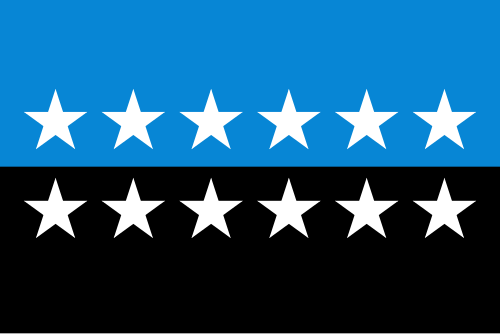
The Merger Treaty consolidates the executive bodies of the ECSC, EEC, and Euratom into a single Council and single Commission. This creates a unified institutional framework for the three European Communities, streamlining governance.
First Enlargement — UK, Ireland, and Denmark Join (January 1, 1973)

The European Communities expand from 6 to 9 members. The UK's entry follows Charles de Gaulle's two vetoes (1963 and 1967). Norway also negotiated membership but rejected it in a referendum. The accession of the UK, a major economic and military power, transforms the Community's political weight.
First Direct Elections to the European Parliament (June 1979)

Citizens of all member states directly elect Members of the European Parliament (MEPs) for the first time. Previously, MEPs were appointed by national parliaments. Direct elections strengthen the democratic legitimacy of European institutions.
The Single European Act (February 28, 1986)
The first major revision of the Treaty of Rome sets December 31, 1992 as the deadline for completing the single market — the free movement of goods, services, capital, and people. It extends qualified majority voting in the Council and gives the European Parliament more power.
The Maastricht Treaty Creates the European Union (February 7, 1992)

The Maastricht Treaty establishes the European Union with a three-pillar structure: the European Communities, Common Foreign and Security Policy, and Justice and Home Affairs. It sets a timetable for economic and monetary union (the single currency), creates EU citizenship, and significantly expands the Parliament's powers.
The Euro Launched (January 1, 1999, coins 2002)

Eleven member states adopt the euro as their common currency for electronic transactions and accounting. The European Central Bank is established to manage monetary policy. Euro coins and banknotes enter circulation on January 1, 2002, replacing national currencies in 12 of 15 member states.
The Treaty of Lisbon (December 13, 2007)

The Treaty of Lisbon merges the EU's three pillars into a single legal entity. It creates the President of the European Council (permanent chair), the High Representative for Foreign Affairs, gives the EU legal personality to sign treaties, and strengthens the European Parliament. Ratified in 2009 after the failed European Constitution (2005).
The Eurozone Sovereign Debt Crisis (2010-2015)

Greece requests an international bailout, triggering a sovereign debt crisis that spreads to Ireland, Portugal, Spain, and Cyprus. The EU and IMF provide emergency loans totaling hundreds of billions of euros. In exchange, bailout countries implement severe austerity programs. The crisis leads to the creation of the European Stability Mechanism (ESM) and a banking union framework.
The European Migration Crisis (2015-2016)

Over 1.3 million asylum seekers, primarily from Syria, Afghanistan, and Iraq, enter the EU in 2015. The response generates deep political divisions — Germany accepts over a million under Chancellor Merkel's open-door policy, while several Eastern member states resist mandatory relocation quotas. The crisis strains the Schengen free-travel area and fuels the rise of anti-EU populist parties.
Brexit — The UK Votes to Leave (June 23, 2016 - January 31, 2020)

In a referendum, the United Kingdom votes 52% to 48% to leave the European Union. After years of contentious negotiations — including two changes of Prime Minister (May, Johnson) — the UK formally withdraws on January 31, 2020. A trade deal is agreed on December 24, 2020. Brexit is the first and only withdrawal of a member state, dealing a major blow to the EU's self-image as an irreversible project.
Ongoing Challenges — Rule of Law, Enlargement, and Future Direction (2020s)
The EU faces multiple ongoing challenges: rule-of-law disputes with Poland and Hungary over judicial independence; the shock of Russia's invasion of Ukraine and the EU's response (sanctions, energy diversification, Ukraine granted candidate status); the post-pandemic recovery fund (NextGenerationEU); and the challenge of carbon neutrality by 2050 under the European Green Deal.
The 2026 Ceuta Migrant Crisis Strains Schengen Solidarity (July 30, 2026)

From July 30, 2026, an estimated 80,000 people, mainly young men from Morocco and sub-Saharan Africa, crossed illegally into the Spanish enclave of Ceuta from Morocco within days - the largest single border breach in the EU's external border in Africa, with at least 111 deaths reported. The surge followed Spain's January 2026 mass regularisation of over one million undocumented migrants, a June 2026 Supreme Court ruling restricting 'summary returns' of people arriving by sea, and Sanchez's July 20 visit to Algeria amid a Morocco-Algeria-Western Sahara rivalry. The crisis triggered an unprecedented intra-EU confrontation: Italy, Finland, the Czech Republic, Sweden, Denmark and Austria called for Spain's suspension from the Schengen area, France and Italy reimposed border checks, and a letter signed by 22 EU heads of government - led by Italy and Denmark - accused Spain's regularisation policy of acting as a 'pull factor' and demanded emergency interior minister talks. Spain's Prime Minister Pedro Sanchez rejected the criticism, blaming smuggling networks and what he called asymmetric attacks on his government, while the European Commission offered Frontex support and urged respect for EU law and the protection of minors. Thousands of migrants, including hundreds of unaccompanied minors, remained in Ceuta for weeks as the city declared its reception facilities collapsed, and a second attempted mass crossing was blocked by Moroccan security forces in mid-August.
Location: Ceuta, Spain
Iceland Rejects Resuming EU Accession Talks in Referendum (August 29, 2026)

Icelandic voters rejected reopening European Union accession talks by 52.8% to 47.2% in a consultative referendum, dealing a blow to the EU's enlargement ambitions toward its wealthy EFTA neighbours. The talks, begun in 2009, had been shelved by the center-right government in 2013. The 'no' campaign, better funded and buoyed by the governing coalition's own divisions, centred on sovereignty and control of Iceland's fisheries, and its result drew congratulations from Eurosceptic figures across Europe. Support for joining had nonetheless risen from 19% in 2010 to 47% in this vote, with Reykjavik voting 'yes' while rural and coastal districts carried the 'no'. EU officials downplayed the impact, insisting enlargement momentum for Montenegro, Albania, Moldova and Ukraine would continue, while analysts noted the vote complicated Brussels' security-driven pitch that European unity was essential amid the threat from Russia.
EU Opens Door to Canada as First 'Associate Member' — State of the Union 2026 (September 16, 2026)
In her State of the Union address to the European Parliament in Strasbourg, Commission President Ursula von der Leyen declared the EU would open the door to Canada becoming the bloc's first 'associate member' -- a status not set out in EU treaties -- spanning cooperation on economic security, defence industries, the Arctic, energy and critical minerals. Canadian Prime Minister Mark Carney addressed the plenary the following day, the first Canadian leader to do so as guest of honour. Von der Leyen also called the EU's goods trade deficit with China of roughly one billion euros per day 'unsustainable', saying the EU would use 'all the tools at our disposal to rebalance' the relationship, and announced a European Corporation on critical raw materials. In response to a summer of heatwaves and wildfires, she proposed a 'climate insurance alliance' to expand coverage of catastrophe losses, which stood at roughly 25 percent in Europe. Critics noted the associate-membership concept lacks any legal basis in the treaties and would require unanimous ratification by all member states, leaving its realization uncertain.