
The English Civil War and the Glorious Revolution (1642-1688)
A 46-year sequence of armed conflicts, constitutional experiments, and political settlements in England, Scotland, and Ireland. The English Civil War, the execution of Charles I, the Interregnum under Oliver Cromwell, the Stuart Restoration, and the Glorious Revolution together reshaped the relationship between monarch and Parliament. The Bill of Rights of 1689 established the principle that the English king ruled with parliamentary consent, a doctrine that became foundational to the American Revolution and modern constitutional democracies.
Events
Charles I Begins His Personal Rule
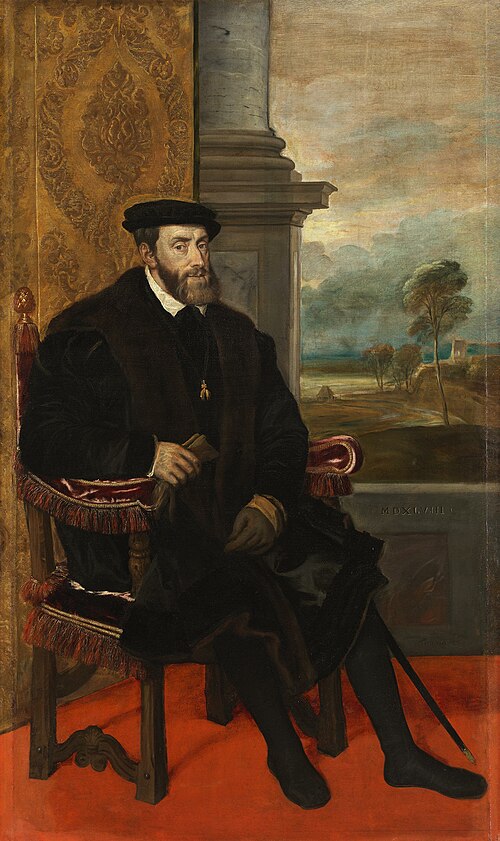
On 10 March 1629, Charles I dissolved Parliament and began an 11-year period of personal rule without parliamentary consent. The crisis had built over disputes about religion, royal taxation powers (especially "Ship Money"), and Charles's foreign policy failures. Without parliamentary oversight, Charles governed through prerogative courts such as Star Chamber, fueling resentment among the gentry that would explode once he was forced to recall Parliament in 1640.
Location: London, England
The Long Parliament and the Grand Remonstrance

Charles I's defeat in the Bishops' Wars against Scotland forced him to recall Parliament in November 1640, beginning what would be known as the Long Parliament. On 1 December 1641, Parliament passed the Grand Remonstrance, a sweeping list of grievances and demands for ministerial accountability. The document crystallized the constitutional crisis: Parliament would no longer accept government without its consent, and Charles would not concede that principle. Both sides began preparing for armed confrontation.
Location: London, England
Outbreak of the First English Civil War

On 22 August 1642, Charles I raised his standard at Nottingham, formally declaring war on Parliament. The kingdom divided along regional, religious, and social lines: the north and west largely supported the king, while the southeast, London, and the navy supported Parliament. Both sides claimed to be defending ancient English liberties — Royalists as the king's loyal subjects against parliamentary encroachment, Parliamentarians as defenders of law and religion against royal tyranny. The conflict would draw in Scotland and Ireland and eventually kill more than 190,000 people on English soil alone.
Location: Nottingham, England
Battle of Naseby — The Turning Point

On 14 June 1645, the Parliamentarian New Model Army under Sir Thomas Fairfax, with Oliver Cromwell commanding the cavalry, won a decisive victory over the Royalist main army at Naseby in Northamptonshire (about 110 km north of London). The battle destroyed the king's field army, captured his correspondence, and exposed his attempts to recruit Catholic Irish forces. Naseby is widely considered the turning point of the First English Civil War; Royalist resistance continued in scattered campaigns but could not reverse the strategic shift.
Location: Naseby, Northamptonshire, England
Execution of Charles I

On 30 January 1649, Charles I was executed by beheading outside the Banqueting House at Whitehall, London, after a trial by a specially convened High Court of Justice. The court had found him guilty of tyranny and waging war against Parliament. He was the first reigning English monarch to be formally put to death by a legal body. The execution shocked the European political order — monarchs across the continent drew parallels to regicide and condemned the act — but the Parliamentarians believed it was both lawful and necessary. The monarchy and House of Lords were abolished, and England was declared a Commonwealth.
Location: London, England
The Interregnum and Cromwell's Protectorate
On 16 December 1653, Oliver Cromwell was installed as Lord Protector of the Commonwealth of England, Scotland, and Ireland, a position he held until his death in 1658. The Protectorate was, in effect, a military dictatorship sustained by the New Model Army. Cromwell's rule included the Major-Generals' experiment of regional military government (1655-1657), a foreign policy of aggressive Protestant solidarity, and a brutal campaign in Ireland that left deep sectarian wounds. Republicans who had helped execute Charles I found themselves ruled by a king in all but name, and many returned to monarchist sympathies after his death.
Location: London, England
The Stuart Restoration
On 29 May 1660, Charles II entered London on his 30th birthday to mark the restoration of the monarchy after the political chaos that followed Cromwell's death (1658) and the brief and incompetent rule of his son Richard. General George Monck had marched the New Model Army from Scotland and orchestrated a controlled transition, with a new Convention Parliament inviting Charles to return. The Restoration restored the monarchy, the House of Lords, and the Anglican settlement, though it did not reverse all of the Interregnum's legal changes. Republican and regicide plots would be brutally suppressed over the following decades.
Location: London, England
Popish Plot and the Exclusion Crisis
In August 1678, a discredited Anglican clergyman named Titus Oates revealed an alleged Catholic conspiracy to assassinate Charles II and install his Catholic brother James, Duke of York, on the throne. The so-called Popish Plot triggered a wave of anti-Catholic hysteria, the judicial murder of around 22 accused Catholics, and the political realignment known as the Exclusion Crisis (1679-1681), in which Whigs in Parliament attempted to bar James from the succession. Charles II dissolved Parliament rather than accept exclusion. The crisis hardened party lines, gave Parliament a new weapon in the struggle with the Crown, and shaped the religious politics that would culminate in the Glorious Revolution.
Location: London, England
James II and the Bishops' Invitation to William
James II, a Catholic, had become king in 1685 and quickly alienated the Protestant political nation. He dispensed with the Test Act, appointed Catholics to high office, and issued the Declaration of Indulgence suspending religious penal laws. After the birth of a Catholic heir (James Francis Edward Stuart) on 10 June 1688, seven prominent Anglicans — the "Immortal Seven" — signed a secret invitation to the Protestant stadtholder William of Orange to intervene. Their letter crossed the North Sea just as the Dutch States General, alarmed that James might support Catholic France in the Nine Years' War, was already preparing an invasion fleet.
Location: London, England
William's Landing at Torbay and James's Flight

On 5 November 1688 (Old Style), William of Orange landed at Brixham in Torbay with about 15,000 troops and a fleet of warships, claiming to come at the invitation of the English nobility. James II's army, plagued by defections and the absence of key Catholic officers, disintegrated as William advanced toward London. The king attempted to flee on 11 December but was intercepted and returned to London. He escaped successfully on 23 December, reaching France in disguise. The Convention Parliament that convened in January 1689 declared the throne vacant and offered it jointly to William III and Mary II, James's daughter.
Location: Torbay, Devon, England
The Toleration Act and the Religious Settlement

In May 1689, Parliament passed the Toleration Act, granting Protestant nonconformists — Baptists, Congregationalists, Presbyterians, and Quakers — freedom of worship, though they remained barred from public office and the universities. Catholics and anti-Trinitarians were excluded. The Act did not establish full religious liberty, but it ended the most aggressive forms of religious persecution and established the principle that the state would not enforce a single religious uniformity. Together with the Bill of Rights, the Toleration Act represented the first durable constitutional settlement of the religious conflicts that had fueled the civil wars of the previous half-century.
Location: London, England
The Bill of Rights of 1689

On 16 December 1689, the new Parliament passed the Bill of Rights, which William III and Mary II accepted as a condition of their rule. The Act declared that the monarch could not suspend or execute laws without parliamentary consent, levy taxes without parliamentary authorization, maintain a standing army in peacetime without Parliament's approval, or interfere in parliamentary elections. It guaranteed regular parliaments, free speech in debates, and the right of subjects to petition. The Bill of Rights became a foundational text of constitutional monarchy and directly influenced the United States Bill of Rights (1791) and similar instruments in other former British colonies.
Location: London, England