
Emmy Noether — Mathematician and Architect of Modern Algebra
The German mathematician whose theorems tied symmetry to the laws of physics and whose abstract approach reshaped algebra — while fighting exclusion from the academy as a woman and dismissal by the Nazi state as a Jew. Einstein called her the most significant creative mathematical genius yet produced since women's higher education began.
Events
Birth in Erlangen

Amalie Emmy Noether was born in Bavaria, daughter of the mathematician Max Noether. Women in Germany could not then formally enroll in universities, so she initially trained as a language teacher before permission changes around 1904 opened lectures to female auditors — the narrow door through which she entered mathematics.
Location: Erlangen, Germany
Doctorate in Erlangen
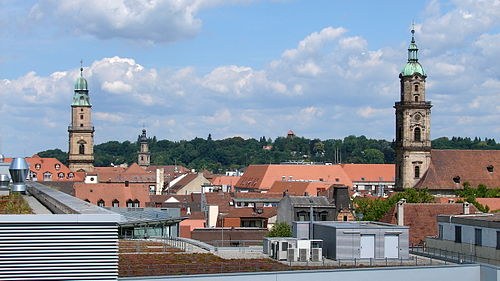
Noether completed her doctorate under Paul Gordan, one of the last champions of computational invariant theory, summa cum laude. She was one of only two women among the university's students. For the next several years she taught at Erlangen without pay or title, substituting for her ailing father.
Location: Erlangen, Germany
Hilbert Invites Her to Gottingen

David Hilbert and Felix Klein invited Noether to the University of Gottingen — the world's center of mathematics — to untangle the mathematical problems of Einstein's general relativity. Hilbert fought the faculty senate for her right to teach, reportedly remarking that he did not see the candidate's sex as an argument against her admission, but lectures under her own name were still denied.
Location: Gottingen, Germany
Noether's Theorem

Noether published "Invariante Variationsprobleme," proving that every differentiable symmetry of a physical system corresponds to a conservation law. Noether's theorem became a cornerstone of modern physics, underlying the conservation of energy, momentum, and charge, and later the standard model of particle physics. Physicists rank it among the most profound results ever proved.
Location: Gottingen, Germany
Habilitation Won After a Four-Year Fight

After the collapse of the German Empire changed the political climate, Gottingen finally granted Noether her habilitation — the qualification to lecture — which she had been denied for years purely on grounds of her sex. She began teaching under her own name, though still unpaid at first, and gathered a school of students from around the world.
Location: Gottingen, Germany
The Algebra Revolution

Her paper "Idealtheorie in Ringbereichen" (Ideal Theory in Ring Domains) rebuilt algebra around abstract axioms rather than concrete calculation, founding what is now called modern abstract algebra. Structures called Noetherian rings, named for her, remain central to mathematics. Contemporaries described her style as a "school of thought" that mathematicians traveled to Gottingen to absorb.
Location: Gottingen, Germany
International Recognition
Noether received the Ackermann-Teubner Memorial Award and delivered a plenary address at the International Congress of Mathematicians in Zurich — the discipline's highest stage. At 50, she was at the peak of her reputation: the algebra she had created was spreading worldwide, carried by her students and her landmark 1932 textbook with others.
Location: Zurich, Switzerland
Dismissal by the Nazi State
Within weeks of the Nazi takeover, the Law for the Restoration of the Professional Civil Service stripped Jewish academics from their posts, and Noether was dismissed from Gottingen. She responded by holding classes in her apartment for students, including those barred from the university. Colleagues scattered as one of history's greatest mathematics departments was dismantled by decree.
Location: Gottingen, Germany
Exile at Bryn Mawr
Noether emigrated to a professorship at Bryn Mawr College, a women's college in Pennsylvania, where she also lectured at the Institute for Advanced Study in Princeton. She built a new circle of students in exile, teaching as she always had — walking, discussing, drafting on scraps — until her work was again in full flow.
Location: Bryn Mawr, Pennsylvania, United States
Death and Einstein's Tribute
Noether died at 53 after surgery, from an infection. Her ashes lie beneath a walkway at Bryn Mawr. Weeks later Einstein wrote in the New York Times that she was "the most significant creative mathematical genius thus far produced since the higher education of women began" — a judgment historians of mathematics have repeated ever since.
Location: Bryn Mawr, Pennsylvania, United States