
The Easter Rising (1916)
The Easter Rising of April 1916, in which Irish republicans proclaimed an independent republic in Dublin during the First World War, and the chain of events it set off. Militarily a defeat that initially drew hostility from many Dubliners, the Rising and the execution of its leaders redirected Irish politics from Home Rule toward full independence within six years.
Events
The Irish Volunteers Are Founded
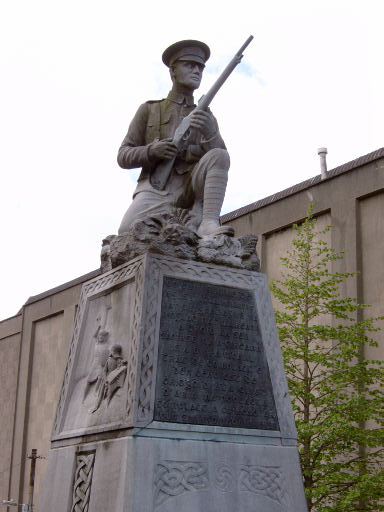
The Irish Volunteers were founded to defend the Home Rule bill then before Parliament against Ulster unionist resistance, mirrored by James Connolly's smaller Irish Citizen Army formed to protect striking workers. Within the Volunteers, the secret Irish Republican Brotherhood began planning an armed rising while Britain fought in the First World War.
Location: Dublin, Ireland
The Rising Begins and the Republic Is Proclaimed

On Easter Monday, about 1,200 rebels seized the General Post Office and other points across Dublin, where Patrick Pearse read the Proclamation of the Irish Republic declaring the right of the Irish people to sovereignty. The rebel forces, joined by Connolly's Citizen Army, expected and received no popular rising in the rest of the country.
Location: Dublin, Ireland
British Forces Suppress the Rising
After six days of fighting, including the shelling of the city center from the gunboat Helga and artillery on Sackville Street, Pearse issued an unconditional surrender. Around 485 people had been killed, a majority of them civilians, and much of central Dublin lay in ruins; many Dubliners expressed hostility toward the rebels as fighting ended.
Location: Dublin, Ireland
The Executions Shift Public Opinion
General Maxwell's courts-martial executed fifteen leaders by firing squad between 3 and 12 May, including Pearse and the badly wounded Connolly, and sentenced hundreds more, with about 1,600 interned in Britain. The severity of the reprisals, widely reported and criticized including by moderates and some in Britain, turned Irish public opinion decisively toward the rebels' cause.
Location: Kilmainham Gaol, Dublin
Sinn Fein Sweeps the 1918 Election
Released internees and reorganized republicans transformed Sinn Fein into the vehicle of the Rising's legacy, and in the general election of December 1918 it won 73 of Ireland's 105 seats on an abstentionist platform, beating the constitutional Home Rule party. The Irish Parliamentary Party, dominant for four decades, collapsed.
Location: Ireland
Dail Eireann and the War of Independence
The elected Sinn Fein members convened Dail Eireann as the parliament of the declared republic, the same day as the Soloheadbeg ambush that began the Irish War of Independence. The guerrilla conflict with British forces lasted until the truce of 1921 and the Anglo-Irish Treaty that created the Irish Free State in 1922.
Location: Dublin, Ireland
The Centenary
Ireland marked the Rising's centenary with state ceremonies, a mass commemoration at the GPO, and a decade-long historical program examining the revolutionary period. The anniversary prompted renewed scholarly debate over the Rising's legacy, including its role in partition and the Civil War that followed independence.
Location: Dublin, Ireland