
Decolonization of Africa and Asia (1941-1994)
The decolonization of Africa and Asia was one of the most transformative political processes of the 20th century, as dozens of nations across two continents emerged from European colonial rule between the end of World War II and the 1990s. Driven by nationalist movements, weakened European powers, Cold War geopolitics, and a new international consensus against colonialism, this era saw the birth of more than 80 new states — fundamentally reshaping global politics, economics, and the map of the world. The process was neither uniform nor uniformly peaceful: it encompassed negotiated transitions, violent liberation wars, settler resistance, and post-independence struggles that in many cases persisted for decades.
Events
Atlantic Charter Affirms Self-Determination
The Atlantic Charter, signed by Roosevelt and Churchill, affirms "the right of all peoples to choose the form of government under which they will live." Though Churchill insists it does not apply to the British Empire, the charter is seized upon by colonial nationalists worldwide as a declaration of principles that would define the postwar order. The charter's selective application — championed by the US but resisted by European allies — highlights the tension between wartime rhetoric and imperial realities.
Indonesian Proclamation of Independence
Two days after Japan's surrender, Sukarno and Mohammad Hatta proclaim Indonesian independence. The Dutch attempt to reassert control — seeking to restore access to oil, rubber, and other colonial resources — leading to four years of armed and diplomatic struggle before the Netherlands recognizes Indonesian sovereignty in December 1949 under US and UN pressure. The conflict illustrates the determination of European powers to retain economically valuable colonies after the war.
Indian Independence and Partition
India gains independence from Britain after nearly two centuries of British rule — a period marked by systematic economic extraction that some historians argue kept India under industrial stagnation — alongside the simultaneous creation of Pakistan. The partition displaces an estimated 15 million people and results in massive communal violence, with deaths estimated between 500,000 and 2 million. India's independence becomes a template and inspiration for anti-colonial movements across Asia and Africa, while the trauma of partition also serves as a cautionary example of how hastily drawn borders can fuel lasting conflict.
First African Independence — Libya
Libya becomes the first African colony to gain independence after World War II, emerging from Italian and Allied administration to become a constitutional monarchy under King Idris. It is the first of what will become a wave of African independence. Libya's oil wealth, discovered in the 1950s, would later become a source of both economic leverage and external intervention.
French Defeat at Dien Bien Phu

The Viet Minh defeat French forces at Dien Bien Phu, ending the First Indochina War. The Geneva Accords of July 1954 grant independence to Laos, Cambodia, and temporarily divide Vietnam at the 17th parallel. French colonial rule in Southeast Asia ends after nearly a century, though the US — viewing the conflict through a Cold War lens — immediately begins supporting the anti-communist State of Vietnam in the south, laying the groundwork for the Vietnam War. Critics argue the US substituted its own imperial influence for France's.
Algerian War of Independence Begins

The National Liberation Front (FLN) launches a coordinated uprising against French colonial rule in Algeria. The Algerian War (1954-1962) becomes one of the bloodiest decolonization conflicts, marked by torture, terrorism, and counter-insurgency, ultimately bringing down the French Fourth Republic. Algeria's status as a settler colony — with over one million European pieds-noirs — made it uniquely contentious, as French officials insisted Algeria was not a colony but an integral part of France.
The Year of Africa — 17 Nations Gain Independence
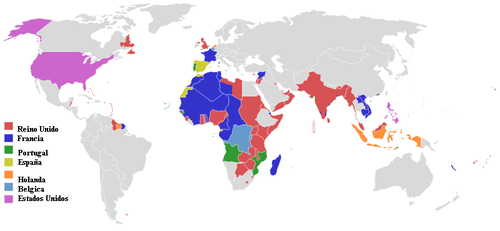
A watershed year: 17 African nations become independent, including Nigeria (the continent's most populous), the Belgian Congo, and all French colonies in sub-Saharan Africa. The Congo Crisis erupts immediately following independence, involving secession of the mineral-rich Katanga province, UN intervention, Cold War proxy entanglement, and the assassination of Prime Minister Patrice Lumumba — whose killing implicates Belgian and US intelligence. The crisis reveals how quickly newly independent states could descend into conflict when colonial-era borders, economic dependency, and Cold War rivalries converged.
UN Resolution 1514 Declares Colonialism a Violation of Human Rights

The United Nations General Assembly adopts Resolution 1514 (XV), the "Declaration on the Granting of Independence to Colonial Countries and Peoples," affirming that "the subjection of peoples to alien subjugation, domination and exploitation constitutes a denial of fundamental human rights." Sponsored by 43 Afro-Asian nations, the resolution declares that immediate steps must be taken to transfer power to colonized peoples. While non-binding, Resolution 1514 becomes a legal and moral landmark for decolonization, cited by liberation movements worldwide and pressuring colonial powers — including holdouts like Portugal — to accelerate withdrawal.
Non-Aligned Movement Founded as Cold War Alternative
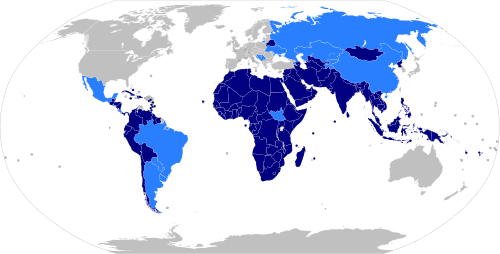
The first Conference of Heads of State or Government of Non-Aligned Countries convenes in Belgrade, bringing together 25 nations — including India's Jawaharlal Nehru, Yugoslavia's Josip Broz Tito, Egypt's Gamal Abdel Nasser, Ghana's Kwame Nkrumah, and Indonesia's Sukarno — who reject alignment with either the US or Soviet blocs. The Non-Aligned Movement (NAM) emerges from the recognition that Cold War rivalries threatened the sovereignty of newly independent states. In practice, however, many NAM members became Cold War battlegrounds nonetheless, as the superpowers armed rival factions in conflicts from the Congo to Angola to Vietnam, often exacerbating post-independence instability.
End of French Algeria

The Evian Accords end the Algerian War after 8 years and an estimated 500,000 deaths. Algeria becomes independent, ending 132 years of French colonization. The conflict forces 1 million pieds-noirs to flee to France. The newly independent FLN-led government establishes a one-party socialist state, a pattern replicated in several post-colonial nations where liberation movements converted their wartime dominance into permanent political control.
Formation of the Organization of African Unity
The Organization of African Unity (OAU) is founded in Addis Ababa by 32 newly independent African states, led by figures including Kwame Nkrumah, Gamal Abdel Nasser, and Haile Selassie. The OAU becomes a platform for coordinating decolonization across the continent while also upholding the principle of existing colonial borders — a decision that critics argue froze in place arbitrary boundaries that would fuel future ethnic conflicts and secessionist wars.
Rhodesia's Unilateral Declaration of Independence and Zimbabwe's Liberation
Rhodesia's white minority government under Prime Minister Ian Smith issues a Unilateral Declaration of Independence (UDI) from Britain, rejecting the principle of majority rule. The declaration triggers international sanctions and a 15-year liberation war waged by nationalist movements ZANU and ZAPU. The conflict ends with the Lancaster House Agreement of 1979 and internationally supervised elections in 1980, bringing Zimbabwe's independence under Robert Mugabe. The Rhodesian UDI exemplifies the determination of white settler minorities to resist decolonization — a pattern also seen in Portuguese Africa and South Africa, where apartheid would persist until 1994.
Carnation Revolution and End of Portuguese Empire
The Carnation Revolution in Portugal topples the Estado Novo regime. The new government immediately begins decolonization: Guinea-Bissau (1974), Mozambique, Cape Verde, Sao Tome and Principe, and Angola all gain independence in 1975. The Portuguese withdrawal marks the end of Europe's longest-lasting colonial empire. The abrupt departure from Angola immediately triggers a civil war that becomes a major Cold War proxy conflict, with the Soviet Union and Cuba supporting the MPLA and the US and South Africa backing UNITA and FNLA. Portugal's poor and underdeveloped colonies had become an economic drain that contributed to the metropolitan regime's collapse.
Post-Independence Challenges and the End of Apartheid
The first democratic elections in South Africa, bringing Nelson Mandela and the African National Congress to power, mark the end of apartheid — one of the last major systems of institutionalized racial rule rooted in the colonial era. South Africa's transition caps a period in which many newly independent states struggled with the legacies of colonial extraction: economies structured for resource export, dependency on former colonial powers, heavy debt burdens, and external pressure from IMF and World Bank structural adjustment programs. Across Africa and Asia, the post-independence decades saw military coups topple governments within a decade of independence (Ghana's Nkrumah in 1966, Nigeria's first coup in 1966), the rise of one-party states, and devastating civil wars, as well as genuine democratic transitions and economic growth. Critics identify "neocolonialism" — continued economic and political control by former colonial powers and international financial institutions — as a persistent constraint on genuine sovereignty, while defenders of the colonial record counter that many post-colonial governments' own policy choices and corruption played significant roles in the challenges that followed. The complex, uneven outcomes of decolonization remain the subject of active historical debate.