
The Crusades (1096-1291)
A series of religious wars launched by the papacy between 1095 and 1291, in which Western European Christians sought to reclaim the Holy Land from Muslim rule. Spanning 195 years and eight major expeditions, the Crusades reshaped relations between Christianity and Islam, transformed European and Middle Eastern societies, and left a contested legacy that continues to influence global geopolitics and interfaith relations.
Events
Pope Urban II Calls the First Crusade

At the Council of Clermont in France, Pope Urban II calls for a military expedition to aid Eastern Christians and reclaim the Holy Land from Muslim rule. The crowd responds with cries of "Deus vult!" ("God wills it!"), and the ritual of "taking the cross" is introduced, with Bishop Adhemar of Le Puy appointed papal legate.
The People's Crusade Ends in Disaster

An unofficial crusade led by Peter the Hermit, composed mostly of peasants and lower-class knights, departs for the Holy Land. The undisciplined force massacres Jewish communities in the Rhineland and is annihilated by the Seljuk Turks in Anatolia.
The First Crusade Captures Jerusalem

After a grueling three-year campaign, Crusader forces capture Jerusalem following a month-long siege. The conquest is accompanied by widespread killing of the city's Muslim and Jewish inhabitants. Four Crusader states are established: Edessa, Antioch, Jerusalem, and Tripoli.
The Second Crusade
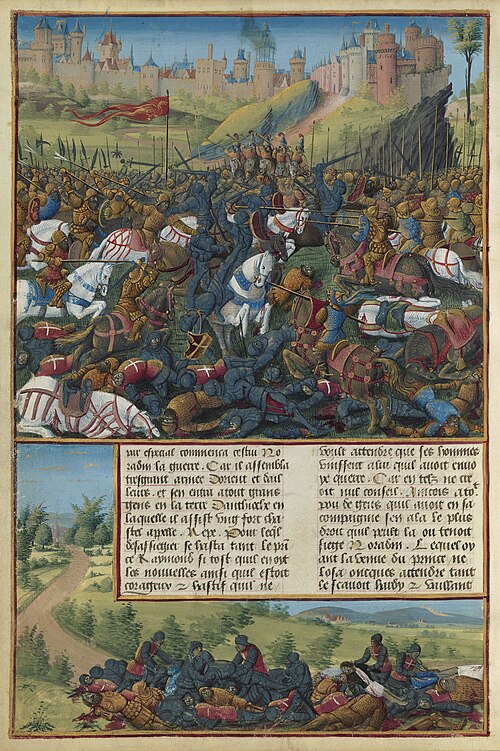
Called after the Muslim capture of Edessa in 1144, the Second Crusade is led by King Louis VII of France and Emperor Conrad III of Germany. It ends in complete failure at Damascus in 1148, severely reducing support for crusading across Latin Christendom and leaving the Crusader states vulnerable.
Saladin Captures Jerusalem at the Battle of Hattin

The Muslim sultan Saladin, having united Egypt and Syria under his rule, crushes the combined armies of the Crusader states at the Battle of Hattin in northern Israel. Jerusalem surrenders to Saladin in October, ending nearly 90 years of Crusader rule in the Holy City and shocking Western Europe.
The Third Crusade

Led by King Richard I of England, King Philip II of France, and Emperor Frederick Barbarossa, the Third Crusade fails to recapture Jerusalem but secures Crusader control of a coastal strip. Richard and Saladin negotiate the Treaty of Jaffa in 1192, guaranteeing safe passage for Christian pilgrims.
The Fourth Crusade Sacks Constantinople

Initially aimed at Egypt, the Fourth Crusade is diverted by Venetian commercial interests to Constantinople. The Crusaders storm and loot the Byzantine capital in April 1204, establishing the Latin Empire. The sack deepens the East-West Schism between Catholic and Orthodox Christianity and permanently weakens the Byzantine Empire.
The Fifth Crusade
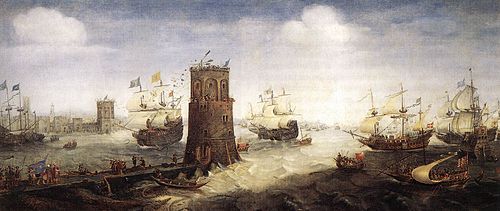
Targeting Egypt as the strategic center of Muslim power, the Fifth Crusade captures the port city of Damietta in 1219 but fails to advance on Cairo. Internal divisions and a Nile flood force the Crusaders to surrender in 1221, ending the campaign in failure.
The Sixth Crusade Returns Jerusalem by Diplomacy

Holy Roman Emperor Frederick II leads the Sixth Crusade, achieving Jerusalem's return through diplomacy rather than combat. He negotiates a treaty with the Egyptian sultan al-Kamil, restoring Jerusalem, Bethlehem, and Nazareth to Crusader control without a battle.
Jerusalem Recaptured by Muslim Forces

Khwarezmian mercenaries, aligned with the Egyptian sultan, besiege and capture Jerusalem, permanently ending Crusader rule in the Holy City. The loss marks a decisive turning point from which the Crusader states never recover.
The Seventh Crusade

King Louis IX of France launches a major crusade against Egypt. The Crusaders capture Damietta in 1249 but are decisively defeated at the Battle of Al-Mansurah in 1250. Louis is captured and held for ransom, spending four years in the Holy Land before returning to France.
The Eighth Crusade

Louis IX again leads a crusade, this time against Tunis in North Africa. Louis dies of disease shortly after arriving, and the crusade collapses. This is the last major attempt by a European monarch to recover the Holy Land.
The Fall of Acre: End of the Crusader States
The Mamluk sultan al-Ashraf Khalil captures Acre, the last major Crusader stronghold in the Holy Land, after a six-week siege. The remaining Crusader towns of Tyre, Sidon, and Beirut fall within weeks. After 195 years, the Crusader presence in the Levant comes to an end.