
The Colonization of Australia (1788-1901)
The British settlement of the Australian continent — a penal colony that became a nation — and the parallel and often violent displacement of Aboriginal and Torres Strait Islander peoples whose consequences remain central to Australian public life.
Events
Cook Claims the East Coast for Britain
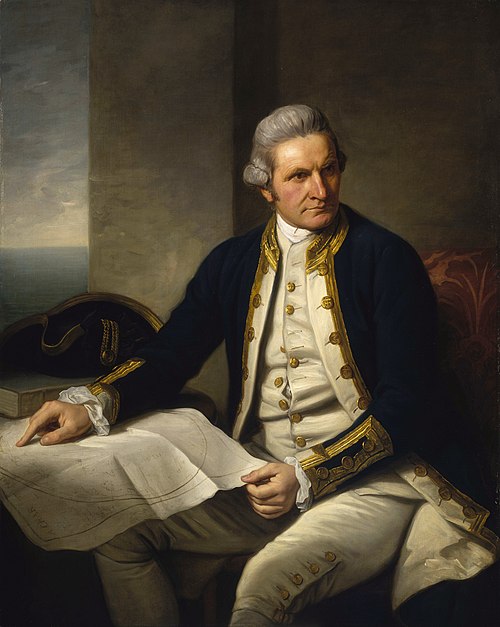
Lieutenant James Cook of HMS Endeavour landed at Kamay (Botany Bay) and claimed the east coast of Australia for Britain under the doctrine of terra nullius — land belonging to no one — despite the presence of Aboriginal peoples who had inhabited the continent for over 60,000 years. The legal fiction would underpin British settlement and be challenged in Australian courts two centuries later.
Location: Botany Bay, Australia
The First Fleet Arrives at Port Jackson

Eleven ships carrying over 1,400 people, most of them convicts, arrived at Port Jackson under Captain Arthur Phillip, founding the penal colony of New South Wales. Britain's stated rationale was partly strategic — securing a Pacific base after losing American colonies — and partly a solution to overflowing domestic prisons. The date became Australia's national day, a focus of ongoing debate over whether it marks celebration or dispossession.
Location: Sydney Cove, Australia
Smallpox Devastates Aboriginal Sydney

A smallpox epidemic swept through Aboriginal peoples around Sydney within a year of British arrival, killing a large share of the Eora and neighboring groups who had no immunity to the introduced disease. Introduced epidemics — smallpox, influenza, measles — would prove a primary driver of depopulation across the continent, alongside violence and dispossession.
Location: Sydney, Australia
Settlement Spreads to Van Diemen's Land

Britain established a second colony at Risdon Cove in Van Diemen's Land (Tasmania). The expansion triggered the Black War of the 1820s, a period of intense frontier conflict between colonists and Tasmanian Aboriginal people. In the early 1830s most surviving Tasmanian Aboriginal people were persuaded or forced to relocate to Flinders Island, where many died; the community survived, and descendants continue to fight for recognition today.
Location: Tasmania, Australia
Crossing the Blue Mountains Opens the Interior
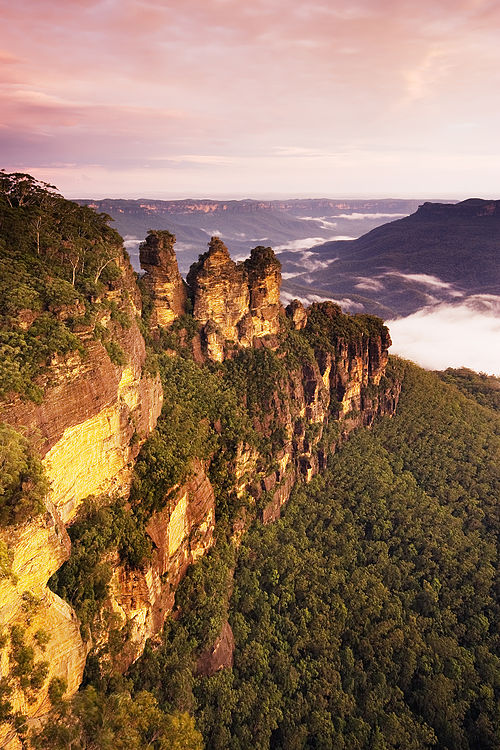
Explorers Gregory Blaxland, William Lawson, and William Wentworth found a route across the Blue Mountains, opening the fertile plains beyond to pastoral settlement. Squatters spread rapidly with their sheep and cattle, occupying Aboriginal lands across the continent with little or no compensation, negotiation, or treaty.
Location: Blue Mountains, New South Wales, Australia
The Myall Creek Massacre and Its Aftermath
Stockmen killed at least 28 unarmed Aboriginal people, mostly women, children, and elderly men, at Myall Creek station. In a rare instance for the era, seven of the perpetrators were tried, convicted, and hanged. Frontier violence continued across the continent; modern scholarship (the Australian Frontier Wars research) estimates tens of thousands of Aboriginal deaths in the conflicts, a historical reckoning that remains contested in Australian public debate.
Location: Myall Creek, New South Wales, Australia
Gold Rushes Transform the Colonies
Gold was discovered in New South Wales and Victoria, triggering rushes that more than tripled the population within a decade and made Melbourne one of the empire's richest cities. The goldfields drew migrants from China, Europe, and the Americas; anti-Chinese riots at Buckland (1857) and Lambing Flat (1861) led to restrictive immigration laws that foreshadowed the White Australia policy. The Eureka Stockade rebellion of 1854 at Ballarat became an enduring symbol of democratic demands.
Location: Victoria, Australia
Transportation of Convicts Ends
The last convict transport, the Hougoumont, arrived at Fremantle, ending nearly 80 years during which some 160,000 men, women, and children were transported to the Australian colonies. From the 1840s anti-transportation movements in the eastern colonies had protested convict arrivals as a brake on free settlement and respectability. The ending of transportation marked the colonies' decisive shift from penal outposts to free societies.
Location: Fremantle, Western Australia
Federation Creates the Commonwealth of Australia
The six colonies united as the Commonwealth of Australia, one of the few nations created by referendum rather than war. The new parliament's first major law was the Immigration Restriction Act — the White Australia policy — excluding non-European migrants with broad support across party lines. Aboriginal people were largely excluded from the constitutional framework and the census, an exclusion not reversed until the 1967 referendum.
Location: Sydney, Australia