
Climate Change: The Scientific and Political History (1896–present)
A chronological account tracing the discovery of the greenhouse effect from Svante Arrhenius's 1896 quantification of CO2's warming impact through continuous CO2 monitoring, landmark scientific warnings, the creation of the IPCC, and the major international climate treaties from Kyoto to Paris and beyond. The story remains ongoing as scientific understanding, global emissions, and political responses continue to evolve.
Events
Svante Arrhenius Quantifies the Greenhouse Effect
In 1896, Swedish physicist and chemist Svante Arrhenius published "On the Influence of Carbonic Acid in the Air upon the Temperature of the Ground," the first quantitative estimate of how atmospheric carbon dioxide affects Earth's surface temperature. Using infrared absorption observations by Samuel Pierpoint Langley, Arrhenius calculated that a doubling of CO2 would raise global temperatures by roughly 5–6 degrees Celsius. He noted that industrial coal burning was adding CO2 to the atmosphere at a rate comparable to natural sources, though he believed significant warming would take thousands of years and considered it potentially beneficial.
Guy Stewart Callendar Links CO2 to Warming
In 1938, English steam engineer and amateur meteorologist Guy Stewart Callendar compiled temperature records dating back to the 19th century and correlated them with historical CO2 measurements. He concluded that global land temperatures had risen over the previous fifty years and proposed that the increase was caused by rising carbon dioxide from fossil fuel combustion — a theory that became known as the "Callendar effect." His findings, produced without the aid of a computer, were met with skepticism at the time but slowly influenced scientific discourse and helped pave the way for organized CO2 monitoring.
Location: London, England, United Kingdom
The Keeling Curve — Continuous CO2 Monitoring Begins at Mauna Loa
In March 1958, geochemist Charles David Keeling of the Scripps Institution of Oceanography began continuous measurements of atmospheric carbon dioxide at the Mauna Loa Observatory in Hawaii as part of the International Geophysical Year. Keeling installed infrared gas analyzers at the remote, high-altitude site to measure unpolluted air above the thermal inversion layer. The resulting record — the Keeling Curve — showed both a seasonal cycle of CO2 and a steady year-over-year rise, providing the first irrefutable evidence that atmospheric CO2 was increasing. The Mauna Loa record continues to this day and is considered one of the most important scientific datasets of the 20th century.
Location: Mauna Loa Observatory, Hawaii, United States
LBJ Science Advisory Committee Warns of Rising CO2
In 1965, the report "Restoring the Quality of Our Environment" by President Lyndon B. Johnson's Science Advisory Committee warned of the harmful effects of fossil fuel emissions on the climate. Using global temperature reconstructions and carbon dioxide data from Charles David Keeling and colleagues, the committee declared the rise of atmospheric CO2 to be the direct result of fossil fuel burning. The report stated that human activities were sufficiently large to have significant global impact and memorably described humanity as "unwittingly conducting a vast geophysical experiment." This was the first high-level U.S. government acknowledgment of the greenhouse gas problem.
Location: Washington, D.C., United States
First World Climate Conference
The First World Climate Conference was held from 12 to 23 February 1979 in Geneva, sponsored by the World Meteorological Organization (WMO). It was one of the first major international meetings on climate change, attended by scientists from a wide range of disciplines. The conference organized working groups to examine climate data, identify climate topics, conduct integrated impact studies, and research climate variability and change. It led to the establishment of the World Climate Programme and the World Climate Research Programme, and ultimately to the creation of the IPCC in 1988.
Location: Geneva, Switzerland
Villach Conference — Scientific Consensus on Climate Change
In October 1985, an international conference on the assessment of the role of carbon dioxide and other greenhouse gases in climate variations was held in Villach, Austria. Organized by the WMO, UNEP, and the International Council of Scientific Unions, the conference brought together scientists who reached a consensus that rising greenhouse gas concentrations would cause significant warming by the first half of the 21st century. The Villach conference's recommendations led directly to the establishment of the Advisory Group on Greenhouse Gases in 1986, a precursor to the IPCC.
Location: Villach, Austria
James Hansen's Senate Testimony
On 23 June 1988, NASA climatologist James Hansen, director of the Goddard Institute for Space Studies, testified before the U.S. Senate Committee on Energy and Natural Resources. Hansen stated he was "99 percent certain" that the warming trend was not natural variation but caused by the buildup of greenhouse gases, and declared that "global warming has begun." His testimony, delivered during a severe summer heat wave, helped raise broad public awareness of climate change and is widely regarded as a landmark moment in the history of the issue.
Location: Washington, D.C., United States
IPCC Established
The Intergovernmental Panel on Climate Change (IPCC) was established in late 1988 by the World Meteorological Organization (WMO) and the United Nations Environment Programme (UNEP), and was endorsed by the UN General Assembly through Resolution 43/53 of 6 December 1988. The IPCC was tasked with providing governments with scientific information about climate change, its impacts, and potential response strategies. It does not conduct original research but assesses thousands of peer-reviewed studies to compile comprehensive Assessment Reports, which have become the authoritative scientific reference for international climate policy.
Location: Geneva, Switzerland
IPCC First Assessment Report — Scientific Consensus Solidified
In 1990, the Intergovernmental Panel on Climate Change (IPCC) published its First Assessment Report (FAR), concluding that emissions from human activities were substantially increasing atmospheric greenhouse gas concentrations and that the planet had warmed 0.3-0.6°C over the previous century. The report provided the scientific foundation for the negotiations that led to the UN Framework Convention on Climate Change and marked the point at which climate change became a mainstream global policy issue.
Rio Earth Summit — UNFCCC Adopted
The United Nations Conference on Environment and Development (UNCED), known as the Earth Summit, was held in Rio de Janeiro from 3 to 14 June 1992 and attended by 108 heads of state and government. A key achievement was the adoption of the United Nations Framework Convention on Climate Change (UNFCCC), an international treaty to combat "dangerous human interference with the climate system" and stabilize greenhouse gas concentrations. The UNFCCC established the principle of "common but differentiated responsibilities" and created the annual Conference of the Parties (COP) process. It was signed by 154 states at the summit and entered into force in 1994.
Location: Rio de Janeiro, Brazil
Kyoto Protocol Adopted
The Kyoto Protocol was adopted on 11 December 1997 in Kyoto, Japan, as an extension of the UNFCCC. It was the first international treaty to set binding emission reduction targets for developed countries, committing them to reduce greenhouse gas emissions by an average of 5 percent below 1990 levels during the first commitment period (2008–2012). The Protocol covered seven greenhouse gases and was based on the principle of common but differentiated responsibilities. The United States did not ratify it, and Canada withdrew in 2012. The Protocol entered into force on 16 February 2005.
Location: Kyoto, Japan
Organized Climate Skepticism and Industry-Funded Opposition
Following the Kyoto Protocol, a coordinated network of think tanks, scientists, and fossil fuel industry groups emerged to challenge climate science and oppose emissions regulation. Organizations including the Global Climate Coalition, the George C. Marshall Institute, and the Heartland Institute received funding from oil, gas, and coal companies to promote skepticism about the scientific consensus. Documents leaked in the 2010s showed that major oil companies including ExxonMobil were aware of climate change risks as early as the 1970s while publicly funding doubt. This movement significantly shaped US politics, contributing to decades of delayed climate legislation.
The Hockey Stick Controversy
Climate scientist Michael Mann and colleagues published a reconstruction of Northern Hemisphere temperatures over the past 1,000 years, producing a graph shaped like a hockey stick that showed abrupt 20th-century warming. The graph was featured prominently in the IPCC Third Assessment Report (2001). Critics Steve McIntyre and Ross McKitrick challenged the statistical methodology, arguing the reconstruction understated historical temperature variability and was overly dependent on certain tree-ring proxies. The controversy led to congressional investigations, the 'Climategate' email leak, and years of legal battles, becoming one of the most contentious debates in climate science.
Kyoto Protocol Enters Into Force
On 16 February 2005, the Kyoto Protocol to the UN Framework Convention on Climate Change entered into force, 90 days after Russia's ratification pushed the treaty past the threshold of 55 industrialized countries representing 55% of developed-nation emissions. The protocol committed 37 industrialized nations to binding greenhouse gas emission reduction targets averaging about 5% below 1990 levels by 2012. It was the first legally binding international climate treaty, though the United States never ratified it.
IPCC and Al Gore Share the Nobel Peace Prize
On 12 October 2007, the Norwegian Nobel Committee announced that the 2007 Nobel Peace Prize would be shared between the Intergovernmental Panel on Climate Change (IPCC) and former U.S. Vice President Al Gore. The prize was awarded "for their efforts to build up and disseminate greater knowledge about man-made climate change, and to lay the foundations for the measures that are needed to counteract such change." The committee cited the IPCC's two decades of scientific reports and Gore's role in creating worldwide understanding of the measures needed to address climate change.
Location: Oslo, Norway
Climategate -- CRU Email Leak
Hackers breached the servers of the University of East Anglia's Climatic Research Unit (CRU) and released over 1,000 emails and documents just weeks before the Copenhagen climate summit. Skeptics seized on selective quotes as evidence that climate scientists had manipulated data and suppressed dissenting research. Multiple independent investigations in the US and UK -- including by the EPA, Penn State University, and the Muir Russell inquiry -- largely cleared the scientists of fraud but noted lapses in transparency and data-sharing practices. The incident significantly damaged public trust in climate science and became a rallying point for skepticism.
Copenhagen Climate Summit Collapse
COP15 in Copenhagen was intended to produce a binding successor to the Kyoto Protocol but ended in widely perceived failure after negotiations between developed and developing nations collapsed over emission targets and financial commitments. A non-binding Copenhagen Accord was salvaged at the last minute through a backroom agreement between the US, China, India, Brazil, and South Africa, but it was merely 'noted' rather than formally adopted by the conference. The failure was a major blow to UN climate diplomacy and raised questions about whether the consensus-based COP process could ever deliver binding commitments.
The Global Warming Hiatus Debate
Global surface temperatures appeared to warm more slowly from 1998 to 2012 than climate models had projected, a phenomenon skeptics labeled 'the pause' or 'hiatus.' The IPCC Fifth Assessment Report (2013) acknowledged the trend, noting that the rate of warming from 1998-2012 was smaller than the trend from 1951-2012. Climate scientists attributed the slowdown to ocean heat uptake, natural variability, volcanic aerosols, and solar cycles. A 2015 NOAA study (Karl et al.) argued the pause was partly an artifact of biased sea-surface temperature data, a finding that itself became controversial when a House Science Committee chairman subpoenaed the researchers' emails.
Paris Agreement Adopted at COP21
On 12 December 2015, the Paris Agreement was adopted at the 21st Conference of the Parties (COP21) to the UNFCCC, held in Le Bourget near Paris. Negotiated by 196 parties, the agreement set a long-term goal of holding the increase in global average temperature to "well below 2°C" above pre-industrial levels, with an aspiration to limit warming to 1.5°C. Unlike the Kyoto Protocol, the Paris Agreement requires all countries — not just developed nations — to submit nationally determined contributions and to strengthen them over time. The agreement entered into force on 4 November 2016.
Location: Paris, France
Energy Poverty and the Developing Nations Climate Debate
Developing nations, particularly India, China, and African countries, have repeatedly argued that aggressive decarbonization mandates could harm economic development and perpetuate energy poverty. At COP21 in Paris and subsequent summits, these nations insisted that climate agreements must balance emissions reduction with development needs, demanding financial transfers, technology access, and differentiated responsibilities. India in particular argued that its per capita emissions were a fraction of Western nations and that denying it the fossil-fuel-driven development path taken by industrialized countries was morally untenable. The tension between development and decarbonization remains a central unresolved conflict in international climate negotiations.
United States Withdraws from and Rejoins the Paris Agreement
On June 1, 2017, President Donald Trump announced the United States would withdraw from the Paris Agreement, citing economic burdens on American workers and industry and arguing the deal unfairly disadvantaged the US while imposing no meaningful obligations on major emitters like China and India. The withdrawal formally took effect on November 4, 2020 -- the day after the US presidential election. President Joe Biden signed an executive order rejoining the Paris Agreement on his first day in office, January 20, 2021. The reversal and re-reversal reflected the deep political polarization of climate policy in the United States.
IPCC Special Report on 1.5°C
On 8 October 2018, the IPCC published the Special Report on Global Warming of 1.5°C (SR15), approved at the IPCC's 48th session in Incheon, South Korea. Prepared by 91 authors from 40 countries and drawing on over 6,000 scientific references, the report stated that limiting warming to 1.5°C would require "rapid, far-reaching and unprecedented changes in all aspects of society." It warned that global net CO2 emissions would need to fall by about 45 percent from 2010 levels by 2030 and reach net zero around 2050. The report highlighted the significant difference in impacts between 1.5°C and 2°C of warming, galvanizing public and political attention on the 1.5°C target.
Location: Incheon, South Korea
Climate Model Accuracy and Sensitivity Debate
A persistent scientific debate exists about whether climate models overproject future warming. Some studies have found that a subset of climate models run 'hot' -- projecting more warming than has been observed, particularly in the tropical troposphere. Critics argue this suggests equilibrium climate sensitivity may be at the lower end of the IPCC's 1.5-4.5 degrees C range. Defenders note that models are broadly accurate when natural variability, ocean heat uptake, and internal variability are accounted for, and that short-term discrepancies do not invalidate long-term projections. The debate has implications for policy: lower sensitivity would mean more time to decarbonize, while higher sensitivity would mean less.
COP26 Glasgow Climate Pact — Phase-Down of Coal Agreed
On 13 November 2021, after two weeks of negotiations, 197 parties at COP26 in Glasgow adopted the Glasgow Climate Pact, the first UN climate agreement to explicitly call for the phased reduction of unabated coal power. The pact required nations to strengthen their 2030 emission targets by the end of 2022, finalized the Paris Agreement rulebook on carbon markets and transparency, and included provisions on loss and damage for vulnerable countries.
COP28 — First Call to Transition Away from Fossil Fuels
On 13 December 2023, COP28 in Dubai concluded with the "UAE Consensus," the first agreement in the history of UN climate summits to explicitly call for "transitioning away from fossil fuels in energy systems, in a just, orderly and equitable manner" to reach net zero by 2050. The deal was reached after negotiations were extended past the scheduled end date due to objections from fossil fuel-producing nations. While the language was widely noted as historic, it received criticism from environmentalists and some nations for lacking a clear commitment to a fossil fuel phase-out or phase-down.
Location: Dubai, United Arab Emirates
COP29 Baku - New Climate Finance Goal and Carbon Credit Rules Agreed
COP29 in Baku, Azerbaijan concluded on 24 November 2024 with the adoption of a New Collective Quantified Goal (NCQG) on climate finance, committing developed countries to deliver at least $300 billion per year to developing nations by 2035 - tripling the previous $100 billion goal. The conference also operationalized market-based mechanisms under Articles 6.2 and 6.4 of the Paris Agreement, establishing rules for international carbon credit trading after nearly a decade of negotiations. The choice of the fossil-fuel-producing, authoritarian host nation drew widespread criticism, and most G7 leaders did not attend. Developing countries criticized the $300 billion target as insufficient, having sought over $1 trillion.
Location: Baku, Azerbaijan
COP30 Belem - First UN Climate Conference in the Amazon
COP30 was held in Belem, Brazil from 10 to 22 November 2025 - the first UN climate conference hosted in the Amazon rainforest and the 10th anniversary of the Paris Agreement. After contentious negotiations where oil-producing nations blocked binding fossil fuel phaseout language, the Brazilian presidency released a final package called the 'global mutirao,' centered on voluntary roadmaps for transitioning away from fossil fuels outside the formal UN process. Key outcomes included a goal to triple climate adaptation finance by 2035, a Just Transition Mechanism to support fairness in moving to a green economy, and adoption of 59 global indicators for tracking adaptation progress. Commentators and climate activists considered the overall outcome weak due to the lack of binding commitments.
Location: Belem, Para, Brazil
2025 Data Confirms First Three-Year Average Above 1.5 Degrees C

In January 2026, the Copernicus Climate Change Service confirmed that 2025 was the third-warmest year on record, 0.13 degrees C cooler than 2024 and marginally cooler than 2023. Global temperatures averaged more than 1.5 degrees C above pre-industrial levels across the three years 2023-2025, the first time a multi-year average exceeded the Paris Agreement's most ambitious target. Scientists regard multi-year averages as a more meaningful measure than any single year, underscoring that long-term warming near the 1.5 degree C limit is arriving more than a decade earlier than projected when the Paris accord was signed in 2015.
Location: Global
PIK Study Detects First Statistically Significant Acceleration of Global Warming

A study by the Potsdam Institute for Climate Impact Research, published in the journal Geophysical Research Letters, reported the first statistically significant detection that global warming is accelerating since around 2015. After filtering out natural influences including El Nino, volcanic eruptions, and solar cycles, researchers measured a warming rate of roughly 0.35 degrees C per decade over the past ten years, compared with under 0.2 degrees C per decade from 1970 to 2015. The acceleration was consistent across five major temperature datasets with more than 98 percent confidence. The authors warned that at the current rate, a long-term exceedance of the 1.5 degrees C Paris limit could occur before 2030.
Location: Global
July 2026 Ties as Earth's Hottest July on Record
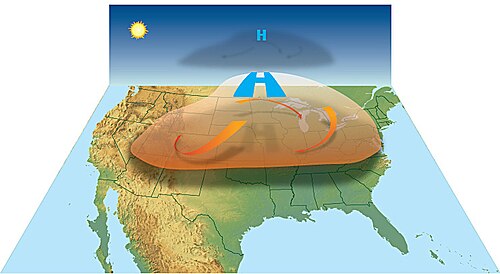
NOAA confirmed July 2026 tied 2024 as Earth's hottest July, with the planet's average temperature 2.12 degrees Fahrenheit (1.18 degrees Celsius) above the 20th-century average. The contiguous United States recorded its hottest month in 132 years of recordkeeping, surpassing the Dust Bowl-era July 1936 record. Western Europe experienced its hottest June-July period on record, driven by two exceptional heatwaves. Sea-surface temperatures reached their highest on record for the month of July, driven in part by a rapidly intensifying El Nino. The World Meteorological Organization, using European Copernicus Climate Change Service data, confirmed July 2026 as the second-warmest July on record.
Federal Court Strikes Down New York's Climate Change Superfund Act

Chief US District Judge Brenda Sannes ruled that New York could not enforce its Climate Change Superfund Act, the first-of-its-kind law signed in December 2024 that sought to require major fossil fuel companies to pay 75 billion dollars over 25 years toward the state's climate adaptation and mitigation costs. Siding with Republican-led states and oil industry challengers, and with the Trump administration's Justice Department arguing against the law, the 63-page decision held that the state law conflicted with federal authority, relying on a 2021 Second Circuit precedent. Supporters called the ruling a setback for the 'polluter pays' climate liability movement and urged an appeal, while opponents celebrated it as a victory against state overreach. The non-binding ruling was closely watched in Vermont, whose similar climate superfund law faced a parallel federal challenge.
UN Environment Programme Declares 1.5 Degrees C Overshoot Inevitable

Eleven years after the Paris Agreement pledged to limit warming to 1.5 degrees C, the UN Environment Programme became the first UN body to formally declare that the world would cross the 1.5-degree threshold, likely within a few years. Secretary-General Antonio Guterres called the announcement 'the fight for humanity,' urging that the overshoot be made as small and short as possible and that temperatures could still be brought back below 1.5 degrees C by 2100 through accelerated fossil fuel phaseout, methane cuts, and adaptation finance. The declaration marked a turning point in official climate discourse: from preventing overshoot to managing it. The report drew criticism from multiple directions -- the Berlin-based institute Climate Analytics warned the framing risked 'being a call to apathy,' while critics noted that scientists and skeptics outside the UN process had long argued that the 1.5-degree goal was unattainable given emissions trajectories.
EPA Repeals Power Plant Greenhouse Gas Standards

EPA Administrator Lee Zeldin signed the final repeal of the 2024 Carbon Pollution Standards, eliminating Biden-era rules that would have required existing coal-fired and new natural gas-fired power plants to sharply cut carbon dioxide emissions starting in the 2030s. Announced in Houston during the U.S.-hosted G20 Energy Summit, Zeldin called it the largest deregulatory action in the history of the U.S. power sector, arguing that prior climate regulations raised energy prices. The agency also proposed rescinding ALL remaining greenhouse gas emission requirements for power plants, on the position that the Clean Air Act does not authorize the EPA to regulate power-sector greenhouse gases at all -- a move that, if finalized, would prevent future administrations from re-regulating power plant emissions. Power plants are the second-largest source of U.S. carbon dioxide emissions. Environmental groups and several states announced plans to challenge the repeal in court, while industry groups and fossil-fuel-state officials welcomed it as removing costly mandates. The action followed decades of regulatory oscillation: the Obama-era Clean Power Plan was stayed and replaced, the Supreme Court's 2022 West Virginia v. EPA ruling curbed the EPA's authority, and the Biden-era standards were the last major federal climate regulation on the books.
Location: Houston, Texas, United States