
The Chernobyl Disaster (1986)
On 26 April 1986, an unsafe safety test at Reactor No. 4 of the Chernobyl Nuclear Power Plant triggered a steam explosion and graphite fire that released massive amounts of radioactive material across the Soviet Union and Europe. The worst nuclear accident in commercial power history, Chernobyl exposed design flaws in the Soviet RBMK reactor, prompted the evacuation of more than 100,000 people, and accelerated reforms in Soviet information policy under Mikhail Gorbachev.
Events
The Safety Test That Preceded the Explosion

On 25 April 1986, a delayed safety test was scheduled at Reactor No. 4 of the Chernobyl Nuclear Power Plant. The test was meant to verify that the coasting turbine could power coolant pumps during a station blackout. The Kiev grid controller asked the plant to delay the test, postponing it from the day shift to the night shift. The reactor was kept running outside its normal operating envelope for nine hours, with the emergency core cooling system left disabled. The night-shift crew inherited a task they had not been trained for.
Reactor No. 4 Explosion
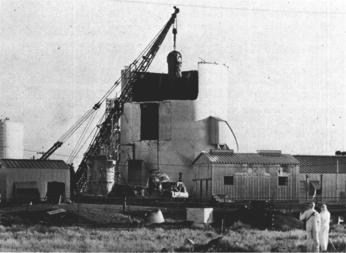
At 01:23 on 26 April 1986, a power surge in Reactor No. 4 caused fuel rods to rupture, triggering steam explosions that blew the 1,000-tonne upper biological shield off the reactor and exposed the core. The resulting graphite fire sent a plume of radioactive material — including iodine-131, cesium-137, and other isotopes — high into the atmosphere. Two plant workers were killed by the explosion; 28 emergency responders later died from acute radiation sickness.
Firefighters' Response and Radiation Exposure

Pripyat firefighters under Lieutenant Volodymyr Pravyk were the first to arrive, battling fires on the roof of the reactor building and surrounding structures. The fires on the roof were extinguished by 05:00, but the fire inside Reactor No. 4 burned for ten more days. Most firefighters had not been told that the smoke and debris were radioactive. Twenty-eight of the 237 initially hospitalized workers died within three months of acute radiation syndrome; many of the survivors developed long-term health complications.
Evacuation of Pripyat

On 27 April, Soviet authorities ordered the evacuation of the city of Pripyat, home to roughly 49,000 plant workers and their families. Residents were told to bring only what was necessary and that they would be away for approximately three days. By 15:00, 53,000 people had been moved by bus to the Kiev region. The evacuation zone was expanded to a 30 km radius over the following days, eventually displacing approximately 116,000 people from what became the Chernobyl Exclusion Zone. A new city, Slavutych, was built across the Dnieper marshes to house the plant workforce.
Detection in Sweden and Soviet Acknowledgment

On 28 April, elevated radiation levels set off alarms at the Forsmark Nuclear Power Plant in Sweden, more than 1,000 km from Chernobyl. Swedish authorities contacted Moscow, which initially denied any accident. Only after Sweden threatened to alert the International Atomic Energy Agency did the Soviet government acknowledge that a reactor at Chernobyl had been damaged. At 21:02 that evening, a 20-second announcement was read on the state TV programme Vremya. The Soviet news agency TASS referenced earlier American nuclear accidents, including Three Mile Island, in what The New York Times correspondent Serge Schmemann described as a common Soviet tactic of deflection.
May Day Parade in Kiev
Despite elevated radiation levels and the recent evacuation of nearby Pripyat, the Soviet government held a May Day parade in Kiev on 1 May 1986. A Politburo meeting on 30 April had been told by scientists that background radiation was normal, although monitoring data was later disputed. The march was shortened from the usual three to four hours to under two. International observers and dissidents criticized the decision as prioritizing the appearance of state normalcy over public health.
Sarcophagus Construction
Over more than seven months, an estimated 500,000 liquidators — firefighters, miners, engineers, and military reservists — worked to contain the destroyed reactor. Workers used helicopters to drop more than 5,000 tonnes of sand, lead, and boron to smother the exposed core. Soviet engineers designed a massive concrete-and-steel structure, the "sarcophagus," to encase the ruined reactor building and limit further release of radioactive material. The sarcophagus was completed on 30 November 1986, though it was understood to be a temporary measure.
Resettlement and Long-Term Health Effects
Between 1986 and 2000, approximately 350,000 people were permanently resettled from the most contaminated areas. Long-term health effects emerged over the following decades. The World Health Organization reported that, by 2005, roughly 6,000 cases of childhood thyroid cancer had occurred in affected populations, with 15 fatalities, and attributed a large fraction to the accident. Estimates of total long-term deaths range from 4,000 (United Nations figure for Ukraine, Belarus, and Russia) to 16,000 across Europe.
IAEA Reports — Operator Error vs. Reactor Design
The International Atomic Energy Agency issued its first major report on the accident, INSAG-1, in 1986, attributing the disaster primarily to operator error. After Soviet scientists provided additional information, the IAEA revised the report in 1992 as INSAG-7, concluding that the RBMK reactor's design flaws — particularly its positive void coefficient and the graphite-tipped control rods that initially increased reactivity during a scram — were the principal cause. The revised report identified the 1983 Ignalina incident, in which a similar control-rod behavior had been observed, as a warning that had not led to corrective action.
New Safe Confinement Structure

On 29 November 2016, the New Safe Confinement — a 36,000-tonne steel arch designed to last 100 years — was slid into place over the original sarcophagus. Built by an international consortium and funded in part by the European Bank for Reconstruction and Development, the structure was engineered to allow the eventual dismantling of the unstable 1986 sarcophagus and the remaining reactor debris. Clean-up and decommissioning are scheduled to continue until at least 2065.