
Charles Darwin — Naturalist and Author of the Theory of Evolution
Charles Darwin (1809-1882) was an English naturalist whose theory of evolution by natural selection became the foundation of modern biology. His voyage on HMS Beagle, observations of the Galapagos Islands, and decades of research culminated in On the Origin of Species (1859), one of the most influential scientific works ever published.
Events
Birth in Shrewsbury

Charles Robert Darwin is born in Shrewsbury, Shropshire, England, into a wealthy and intellectually prominent family. His grandfather Erasmus Darwin was a physician and evolutionary thinker, and his maternal grandfather was Josiah Wedgwood of the pottery dynasty.
Studies Medicine at Edinburgh
Darwin enrolls at the University of Edinburgh Medical School at age 16, following his father's wishes. He finds lectures dull and surgery distressing, neglecting his studies. Instead, he joins the Plinian Society and assists naturalist Robert Edmond Grant in studying marine invertebrates.
Graduates from Cambridge
Darwin completes a Bachelor of Arts degree at Christ's College, Cambridge, originally intended as preparation for the Anglican clergy. He develops a passion for natural history under botanist John Stevens Henslow and becomes known as "the man who walks with Henslow." He also develops skills in geology with Adam Sedgwick.
HMS Beagle Voyage Begins

Darwin embarks on HMS Beagle under Captain Robert FitzRoy for a five-year survey voyage around the world. Despite severe seasickness, he spends most of the voyage on land investigating geology and collecting natural history specimens. The voyage will transform his understanding of the natural world.
Visits the Galapagos Islands

Darwin arrives at the Galapagos Islands, where he observes finches, tortoises, and mockingbirds that vary from island to island. These observations later become central to his theory of evolution by natural selection, as he realizes species are not fixed but adapt to their environments.
Beagle Returns to England

The Beagle returns to England after nearly five years. Darwin arrives back to find his geological specimens and fossil finds have already made him a rising figure in the scientific community. He begins publishing his findings and seriously considering the implications of his observations.
Formulates Theory of Natural Selection
Darwin reads Thomas Malthus's Essay on the Principle of Population and suddenly grasps the mechanism of natural selection: variations that aid survival in a struggle for existence are preserved, leading to adaptation and speciation. He begins a notebook on the "transmutation of species."
Marries Emma Wedgwood
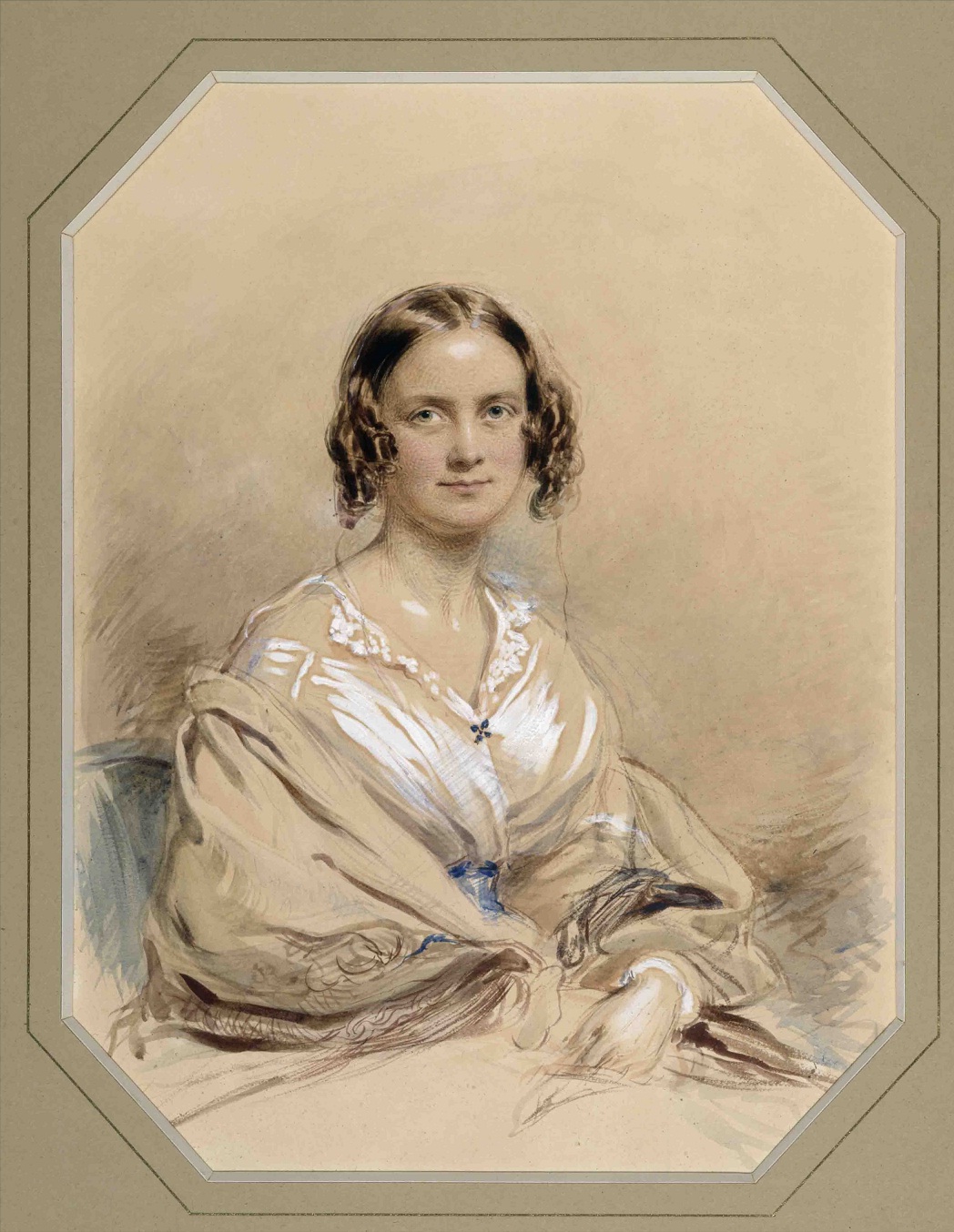
Darwin marries his first cousin Emma Wedgwood. The marriage is a devoted partnership; Emma's religious faith contrasts with Darwin's growing agnosticism. They have ten children, three of whom die in childhood, an experience that deeply affects Darwin.
Joint Presentation with Wallace on Natural Selection
After Alfred Russel Wallace independently conceives the theory of natural selection, Darwin's friends arrange a joint presentation of both men's papers at the Linnean Society of London. This spurs Darwin to rapidly complete his book, which he had been developing for two decades.
Publishes On the Origin of Species

Darwin publishes On the Origin of Species by Means of Natural Selection, presenting compelling evidence that all species of life have descended from common ancestors and that evolution occurs through natural selection. The first edition of 1,250 copies sells out on the first day, sparking intense public and scientific debate.
Publishes The Descent of Man
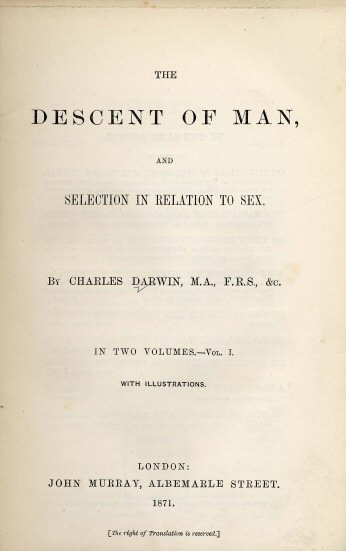
Darwin publishes The Descent of Man, and Selection in Relation to Sex, explicitly applying his theory to human evolution. He argues that humans share a common ancestor with other primates, further inflaming the controversy between science and religion. The book becomes another bestseller.
Death and Burial in Westminster Abbey

Darwin dies at his home in Downe, Kent, at the age of 73. Despite his controversial legacy, he is honored with burial in Westminster Abbey, near the grave of Sir Isaac Newton. His pallbearers include fellow scientists Alfred Russel Wallace, Thomas Henry Huxley, and Joseph Dalton Hooker.