
Charlemagne — King of the Franks and First Holy Roman Emperor
King of the Franks from 768 and emperor from 800, who united most of western and central Europe for the first time since the fall of Rome. His conquests, forced conversions, and court scholarship made him both the architect of a short-lived empire and a lasting symbol of European unity, called the Father of Europe by later generations.
Events
Birth and Frankish Inheritance

Charles, later called Charlemagne, was born on 2 April 748, eldest son of Pepin the Short and Bertrada of Laon. His father had deposed the last Merovingian king with papal sanction in 751, founding the Carolingian dynasty. Charles inherited a kingdom strengthened by its alliance with the papacy and an army of Frankish freeholders.
Location: Francia
King of the Franks

On 9 October 768, Charlemagne was crowned king at Noyon after Pepin's death, sharing the realm with his brother Carloman I until Carloman's death in 771 left Charles sole king. The early years of his reign were spent consolidating the Frankish kingdom and suppressing revolts in Aquitaine.
Location: Noyon, Francia
The Saxon Wars Begin

Beginning with the destruction of the Irminsul, a Saxon sacred site, in 772, Charlemagne fought some thirty campaigns over three decades to annex Saxony. Frankish conquest included mass forced baptisms and severe laws that made paganism and rebellion capital offenses. The wars reshaped the religious and political map of northern Europe at enormous human cost.
Location: Saxony (modern Germany)
Conquest of the Lombard Kingdom

Answering a papal appeal, Charlemagne invaded Italy in 773 and after a long siege took the Lombard capital Pavia in June 774, exiling King Desiderius and taking the title King of the Lombards. The conquest placed northern Italy under Frankish control and made the papacy a dependent ally of the Carolingians rather than of the Byzantine emperors who claimed the region.
Location: Pavia, Kingdom of the Lombards
The Massacre of Verden
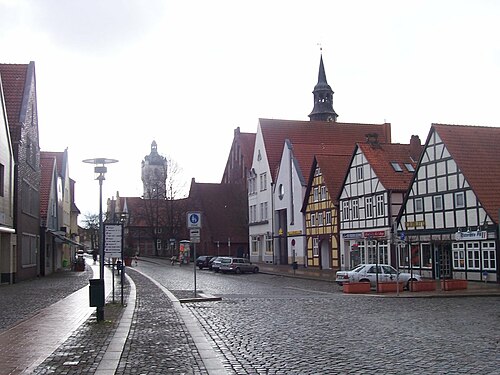
In 782, according to the Royal Frankish Annals, Charlemagne ordered the execution of around 4,500 Saxon captives at Verden after a Saxon revolt. The reliability of the figure has been debated by later historians, but the episode became emblematic of the brutal methods used to force Saxony's conversion and submission. The bloodbath provoked further Saxon uprisings under Widukind, who led resistance until his surrender and baptism in 785.
Location: Verden, Saxony
The Carolingian Renaissance
From the 780s Charlemagne gathered scholars at his court, notably Alcuin of York, reviving classical learning, standardizing Latin, and reforming the text of the Bible in an effort later called the Carolingian Renaissance. Monastic scriptoria developed the clear Carolingian minuscule script that preserved most surviving Roman literature. The program also corrected a fragmented, centuries-drifting ecclesiastical practice across the empire.
Location: Aachen, Frankish Empire
Defeat of the Avars
Between 791 and 796, Frankish armies campaigning south of the Danube broke the power of the Avar khaganate, a steppe empire that had long raided Europe, and seized the hoard of the Avar Ring. The enormous treasure sent to Aachen helped finance Charlemagne's building program, and the campaign opened Pannonia to Frankish missionary activity and settlement.
Location: Pannonia (modern Hungary)
Coronation as Emperor

On Christmas Day 800, Pope Leo III crowned Charlemagne emperor of the Romans in Old St. Peter's Basilica, creating in the West an imperial title unused since 476. The act, coming after Leo had been attacked in Rome and restored by Frankish power, also served Charlemagne's protection of the papacy. Byzantium viewed the coronation as a usurpation and only recognized the title after prolonged negotiation.
Location: Rome, Papal States
Death at Aachen

Charlemagne died on 28 January 814 at Aachen, the palace-city he had made his capital, and was buried in its Palatine Chapel. He was succeeded by his only surviving legitimate son, Louis the Pious, who inherited an empire stretching from the Atlantic to the Elbe and from the North Sea to central Italy.
Location: Aachen, Frankish Empire
The Treaty of Verdun Divides the Empire

After Louis the Pious died in 840, his sons fought a civil war ended by the Treaty of Verdun in August 843, which divided the empire into West, Middle, and East Francia among the three heirs. The division roughly prefigured the later territories of France and Germany and marked the end of the unified Carolingian project within a single generation of its founder's death.
Location: Verdun, West Francia