
The Cambodian Genocide (1975-1979)
Between April 1975 and January 1979, the Khmer Rouge regime under Pol Pot subjected Cambodia to a radical agrarian revolution that killed an estimated 1.5 to 2 million people — roughly one quarter of the population — through mass execution, forced labor, starvation, and disease. The regime emptied the cities, abolished money and religion, and systematically targeted intellectuals, ethnic minorities, and perceived political opponents.
Events
The Lon Nol Coup and the Cambodian Civil War
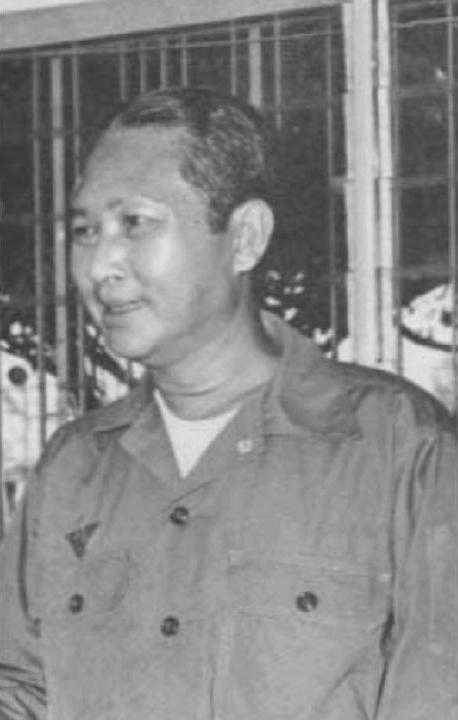
General Lon Nol, with the backing of the United States, ousts Prince Norodom Sihanouk in a coup. The coup draws Cambodia directly into the Vietnam War and fuels the growth of the communist Khmer Rouge insurgency, which claims to be defending Sihanouk.
US Bombing of Cambodia

US forces conduct a covert bombing campaign (Operation Menu, 1969-1970) and an incursion into eastern Cambodia to attack North Vietnamese supply lines. The sustained bombing, which continued until 1973 and dropped hundreds of thousands of tons of bombs, devastated rural areas and is widely cited as a factor in driving peasant support to the Khmer Rouge.
The Khmer Rouge Capture Phnom Penh

After five years of civil war, Khmer Rouge forces enter and capture Phnom Penh, ending the US-backed Lon Nol government. The fall of the city came just weeks before the fall of Saigon. The Khmer Rouge immediately begins evacuating the capital.
"Year Zero" and the Evacuation of the Cities

The Khmer Rouge declares "Year Zero" and forces the entire population of Phnom Penh — approximately 2 million people — to march into the countryside. Money, markets, schools, and religion are abolished. The urban population is reorganized into rural agricultural communes and forced-labor camps.
Democratic Kampuchea Is Proclaimed
The Khmer Rouge proclaims the state of Democratic Kampuchea with a new constitution. In April, Pol Pot becomes Prime Minister. The regime pursues an ultra-Maoist policy of rapid collectivization, abolishing currency, private property, and the traditional family structure.
Tuol Sleng (S-21) and the Killing Fields
The regime operates Security Prison 21 (Tuol Sleng), a former high school converted into an interrogation and torture center. An estimated 20,000 people passed through S-21, with only a handful surviving. Prisoners were taken to execution sites — the "Killing Fields" — where they were killed and buried in mass graves. The Documentation Center of Cambodia has mapped more than 23,000 mass graves containing an estimated 1.3 million suspected victims of execution.
Internal Purges and Conflict with Vietnam
The Khmer Rouge conducts increasingly intense internal purges, executing thousands of its own cadres and party members suspected of disloyalty — the "S-21 generation." Border clashes with Vietnam escalate throughout 1977-1978, as the regime launches attacks on Vietnamese villages, setting the stage for a Vietnamese invasion.
The Vietnamese Invasion
Vietnam launches a full-scale invasion of Cambodia with approximately 100,000-150,000 troops, intending to topple the Khmer Rouge regime. The invasion is part of Vietnam's effort to end Khmer Rouge cross-border attacks and install a pro-Vietnamese government.
The Fall of Phnom Penh
Vietnamese forces capture Phnom Penh, overthrowing the Khmer Rouge regime, which flees to the Thai border. The invasion ends the genocide but begins a decade-long Vietnamese occupation. Survivors emerge to find that an estimated 1.5-2 million Cambodians (about 20-25% of the 1975 population) had died.
The Refugee Crisis and the Khmer Rouge's Continued Insurgency
Hundreds of thousands of Cambodians flee to refugee camps along the Thai border as famine and disease spread across the country. The Khmer Rouge, with continued support from China and initially the United States, maintains a guerrilla insurgency and retains its seat at the United Nations until 1993.
The Khmer Rouge Tribunal

The Extraordinary Chambers in the Courts of Cambodia (ECCC), a UN-Cambodian hybrid tribunal established by agreement in 2003 and operational from 2006, begins trying senior Khmer Rouge leaders. In 2010, Kaing Guek Eav (Duch), commandant of Tuol Sleng, is convicted and sentenced to life imprisonment. In 2014, the tribunal convicts Nuon Chea and Khieu Samphan of crimes against humanity; both are later convicted of genocide in 2018.