
The British Empire — The Rise and Fall of the Largest Empire in History (c. 1583-1997)
The British Empire grew from small overseas settlements in the 16th century to become the largest empire in human history, controlling at its peak roughly a quarter of the world's land and population. Its legacy spans legal systems, languages, trade networks, cultural exchange, and contested histories of colonialism, slavery, and decolonization.
Events
East India Company Founded

Queen Elizabeth I granted a royal charter to the East India Company, giving it a monopoly on English trade with Asia. The company would evolve from a trading enterprise into a military and political force that ruled India for over 250 years.
Jamestown Founded — First Permanent English Settlement in America

The Virginia Company established Jamestown as the first permanent English settlement in the Americas. After a period of extreme hardship and high mortality, the colony survived through tobacco cultivation, setting a pattern for English colonization.
Battle of Plassey — British Control of India Begins

Robert Clive's East India Company forces defeated the Nawab of Bengal at the Battle of Plassey, a decisive victory achieved partly through bribery and intrigue. The battle established British political influence in India and gave the Company vast wealth and territorial control.
Britain Gains Colonial Supremacy — Treaty of Paris

The Treaty of Paris ended the Seven Years' War. Britain gained Canada, territories east of the Mississippi River, Florida, and supremacy in India. The treaty confirmed Britain's status as the world's dominant colonial power.
American Colonies Win Independence
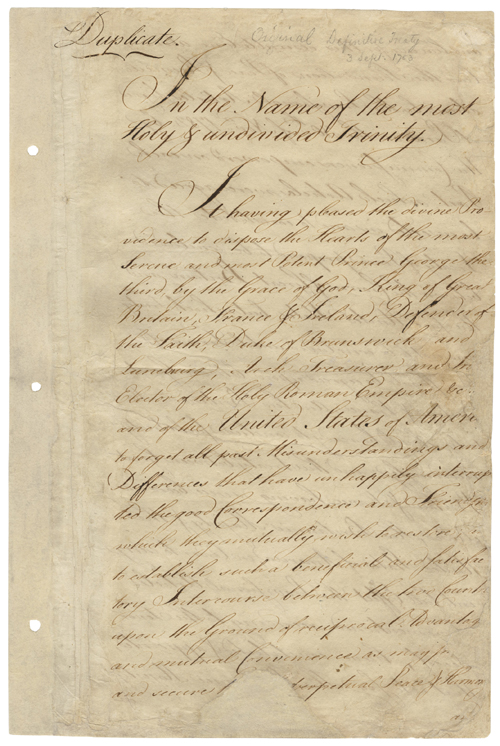
The Treaty of Versailles recognized the independence of the 13 American colonies. Britain lost its wealthiest and most populous colonies but retained Canada and the West Indies. The loss prompted a strategic reorientation toward Asia and the Pacific.
First Fleet Establishes Penal Colony in Australia

Captain Arthur Phillip led the First Fleet of 11 ships carrying convicts to establish a penal colony at Sydney Cove. Australia would develop from a destination for transported prisoners into a major settler colony and eventually a self-governing dominion.
Battle of Trafalgar — British Naval Supremacy
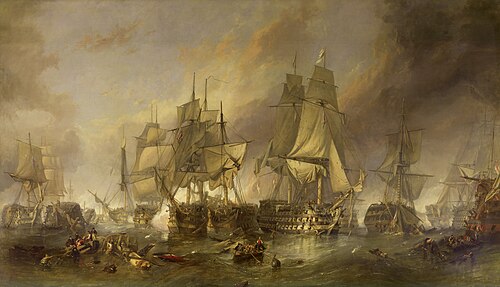
Admiral Horatio Nelson decisively defeated the combined French and Spanish fleet, securing British naval dominance for more than a century. Nelson was killed during the battle. British control of the seas enabled the expansion and protection of the global empire.
Slavery Abolition Act

Britain abolished slavery throughout most of the empire, freeing approximately 800,000 slaves in the Caribbean, Africa, and elsewhere. The government paid 20 million pounds in compensation to slave owners, a decision that remains controversial. The Royal Navy began suppressing the Atlantic slave trade.
Indian Rebellion and Establishment of the British Raj
A widespread rebellion against East India Company rule broke out, triggered by grievances including cultural insensitivity, economic exploitation, and religious concerns about new rifle cartridges. After the rebellion was suppressed, Parliament dissolved the Company and established direct Crown rule, with Queen Victoria proclaimed Empress of India in 1877.
The Scramble for Africa — Berlin Conference
European powers, including Britain, met at the Berlin Conference to partition Africa without African representation. Britain gained territories including Egypt, Sudan, Kenya, Nigeria, South Africa, and Rhodesia, extending its empire across the African continent.
Second Boer War
Britain fought the Dutch-descendant Boer republics in South Africa. The war was costly and controversial, with Britain using scorched-earth tactics and establishing concentration camps where thousands of Boer civilians and black Africans died. The conflict damaged Britain's international reputation.
Irish Free State Independence
After the Irish War of Independence, 26 Irish counties became the Irish Free State, a dominion within the British Empire. Six northern counties remained part of the United Kingdom. This was the first major decolonization of the 20th century.
Indian Independence and Partition
India and Pakistan became independent nations, ending 190 years of British rule. The partition created two states along religious lines, triggering one of the largest population transfers in history and communal violence that killed an estimated one to two million people.
Ghana Independence — First African Decolonization

Ghana, under Kwame Nkrumah, became the first sub-Saharan African colony to gain independence from Britain. The event sparked a wave of decolonization across the African continent, with over 30 British colonies gaining independence over the following two decades.
Hong Kong Handover — End of Empire

Britain returned Hong Kong to China, ending 156 years of British colonial rule. The handover ceremony, attended by world leaders, was widely described as the symbolic end of the British Empire.