
The Ayutthaya Kingdom (1351–1767)
The Siamese kingdom centered on the island city of Ayutthaya that dominated mainland Southeast Asia's trade for four centuries, hosted merchants and embassies from across Asia and Europe, and was destroyed by Burmese armies in 1767.
Events
Ramathibodi I Founds Ayutthaya

U Thong, fleeing a smallpox outbreak at his former seat, established a new capital on an island at the confluence of three rivers and was crowned as King Ramathibodi I. The site commanded the Chao Phraya trade routes to the sea. The founding initiated a kingdom that would last 417 years.
Location: Ayutthaya, Siam
The Absorption of Sukhothai

After decades of conflict and marriage alliances, Ayutthaya absorbed the older Sukhothai kingdom, becoming the paramount power in the Chao Phraya basin. The union established Ayutthaya's characteristic political order: a network of semi-autonomous cities owing manpower and tribute to the capital, and set the stage for the long rivalry with Burma to the north.
Location: Siam
Borommatrailokkanat's Administrative Reforms

King Borommatrailokkanat reorganized the kingdom's administration around a centralized palace system, codified law in the Palatine Law of 1455, and formalized the sakdina hierarchy that ranked subjects by service obligations. His reforms defined Siamese kingship and administration for the next three centuries.
Location: Ayutthaya, Siam
The First Fall of Ayutthaya to Burma
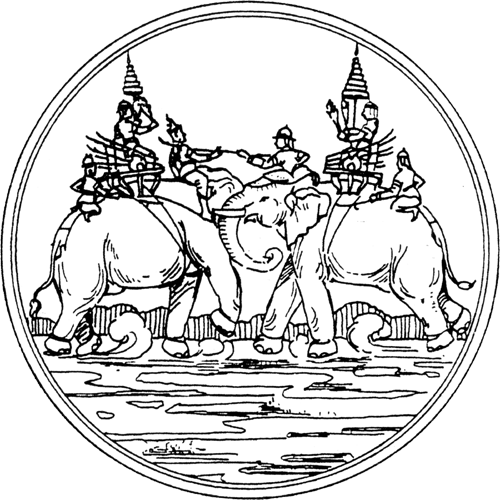
King Bayinnaung of the Toungoo dynasty captured Ayutthaya after a siege, placing a vassal king on the Siamese throne and making the kingdom a Burmese tributary. The conquest ended Ayutthaya's first imperial age as part of Bayinnaung's creation of the largest empire in Southeast Asian history.
Location: Ayutthaya, Siam
Naresuan Restores Independence
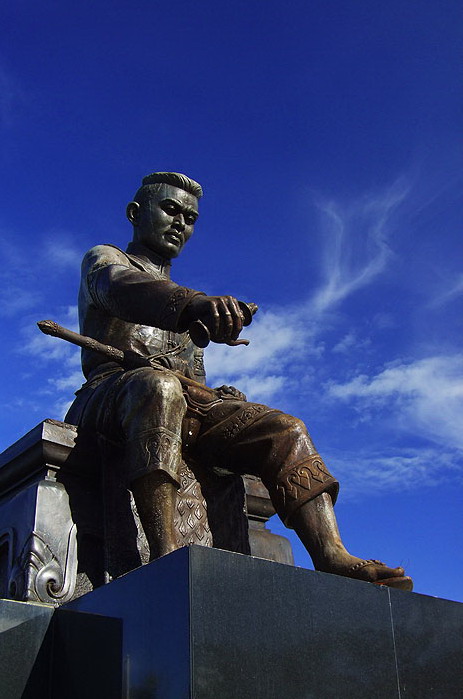
Naresuan, raised as a hostage at the Burmese court, declared independence in 1584 and defeated the Burmese crown prince Mingyi Swa in a celebrated elephant duel at the battle of Nong Sarai. His campaigns ended Burmese suzerainty and made him the kingdom's most revered monarch.
Location: Nong Sarai, Siam
The Reign of King Narai and Global Diplomacy
King Narai's reign brought Ayutthaya to the height of its international profile, with Persian, Dutch, and French envoys at court and Greek adventurer Constantine Phaulkon rising to chief minister. In 1686 a Siamese embassy was received at Versailles, and French missionaries and troops were stationed in the kingdom.
Location: Ayutthaya, Siam
The Siamese Revolution of 1688
As Narai lay dying, the minister Phetracha led a coup that overthrew Phaulkon, expelled the French garrisons, and reversed the pro-French orientation of the court. The revolution closed an era of extensive Western contact; for over a century afterward Ayutthaya restricted European trade and missionary activity while commerce with Asian merchants continued.
Location: Ayutthaya, Siam
The Fall and Destruction of Ayutthaya
Armies of the Burmese Konbaung dynasty under King Hsinbyushin besieged Ayutthaya for fourteen months, breached the city, and burned the capital, carrying off its treasures and population. The kingdom collapsed with the death of King Ekkathat, ending four centuries of rule. The general Taksin reunited Siam within months, founding a new capital at Thonburi; the ruins of Ayutthaya are a UNESCO World Heritage Site.
Location: Ayutthaya, Siam