
The Assyrian Conquests — The Neo-Assyrian Empire (911–609 BC)
The Neo-Assyrian Empire of Mesopotamia, the first state to rule from Iran to Egypt, built by disciplined armies, mass deportation, and provincial administration — and remembered through the carved reliefs and cuneiform library its kings left at Nineveh.
Events
Adad-nirari II Restores the Assyrian Core

Adad-nirari II began the Neo-Assyrian period by campaigning to retake lands lost after the Bronze Age Collapse, defeating Aramean and Hurrian states around the Assyrian heartland and securing stable food and manpower for renewed expansion.
Location: Assyria, Mesopotamia
Ashurnasirpal II Builds Kalhu

After campaigns described in his annals with detailed accounts of executions of rebels, Ashurnasirpal II rebuilt Kalhu as his capital with a palace whose reliefs and inscriptions advertised royal power — the start of the imperial art program later kings expanded.
Location: Kalhu (Nimrud), Assyria
The Battle of Qarqar
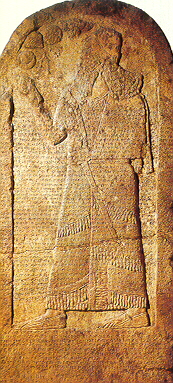
Shalmaneser III met a coalition of Levantine states — including Damascus, Israel, and their allies — at Qarqar, one of the largest battles of the Iron Age. Both sides claimed victory; the coalition checked Assyrian advance into the Levant for decades.
Location: Qarqar, Syria
Tiglath-Pileser III Rebuilds the Empire as a Machine

After a coup, Tiglath-Pileser III created the standing professional army, reorganized conquered lands into provinces under governors, and systematized mass deportation as policy to break resistance and redistribute labor. He took Damascus in 732 BC and made Israel a vassal.
Location: Assyria and the Levant
The Fall of Samaria and the Kingdom of Israel
Assyrian forces under Sargon II captured Samaria, ending the Kingdom of Israel. Large numbers of Israelites were deported to Assyria and Media while foreign populations were settled in the territory — the origin of the "Lost Tribes" tradition.
Location: Samaria, Kingdom of Israel
Sennacherib's Siege of Jerusalem
Sennacherib devastated Judah and besieged Jerusalem under King Hezekiah; his annals record trapping the king "like a bird in a cage," while the biblical account describes the army's withdrawal. Assyrian records list tribute paid, and Judah survived as a vassal.
Location: Jerusalem, Kingdom of Judah
Ashurbanipal's Empire and the Destruction of Elam
Ashurbanipal, the last great Assyrian king, had taken Egypt and sacked Thebes in 663 BC before a long war with his brother in Babylon ended with the crushing of Elam and the sack of Susa in 647 BC, extending Assyrian control to its greatest extent. His royal library at Nineveh collected tens of thousands of tablets, including the Epic of Gilgamesh.
Location: Susa, Elam
The Fall of Nineveh
A coalition of Medes and Babylonians stormed and destroyed Nineveh. Assyrian generals held out at Harran until 609 BC, when the empire ended. Later prophets and Greek writers made Nineveh's ruin a byword for the fall of a tyrant power; its ruins were identified on the Tigris only in the 19th century.
Location: Nineveh, Assyria