
The Algerian War of Independence (1954-1962)
An eight-year war between the Algerian National Liberation Front (FLN) and France that ended 132 years of French colonial rule and produced an independent Algeria in 1962. Marked by guerrilla warfare, a brutal counterinsurgency campaign, the use of torture, terrorism by settlers and the secret OAS, and one of the largest population transfers of the decolonization era, the war transformed both nations and left contested memories that France and Algeria continue to negotiate.
Events
The Insurrection of All Saints' Day
FLN guerrillas launched some 70 coordinated attacks across Algeria, broadcasting a declaration calling for the restoration of Algerian statehood and denouncing colonialism. The French government, which regarded Algeria as an integral part of France with over a million European settlers (pieds-noirs), responded with mass arrests and troop deployments.
Location: Algeria
The Philippeville Massacre

FLN units killed 123 people, including 71 European civilians, in attacks around Philippeville, seeking to internationalize the conflict ahead of a UN session. French forces and settler militias carried out sweeping reprisals; estimates of Muslim Algerian deaths range from 1,200 to 12,000, and the escalation polarized both communities, ending hopes of a moderate middle ground.
Location: Philippeville, Algeria
The Soummam Congress
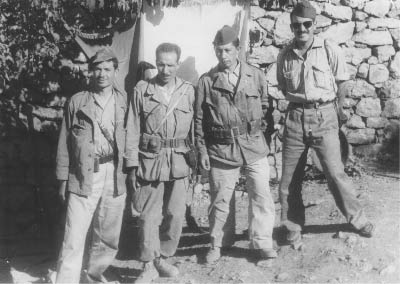
FLN leaders meeting in the Soummam valley unified the movement under a National Council of the Algerian Revolution and prioritized political over military action, backing the urban guerrilla campaign of the Autonomous Zone around Algiers. The congress also ignited internal purges against rival nationalist movement MNA that killed thousands.
Location: Ifri Ouzellaguen, Kabylie, Algeria
The Battle of Algiers

French paratroopers under General Massu deployed to crush the FLN's urban bombing campaign in the Casbah. The operation destroyed the FLN's network in the capital within months, but its methods, systematic torture, mass detention in internment centers, and disappearances, scandalized French and international opinion and became the war's defining controversy.
Location: Algiers, Algeria
De Gaulle Returns to Power

The May 1958 crisis, triggered by a settler and army revolt in Algiers fearing a negotiated peace, brought down the Fourth Republic. Charles de Gaulle, called back as premier and later elected president, initially told European crowds "I have understood you," then moved gradually toward accepting Algerian self-determination, aliening the army and settlers who had restored him.
Location: Algiers and Paris, France
The Demonstrations of December 1960
During de Gaulle's visit, massive Algerian demonstrations with FLN flags broke out across cities, including in areas the French army considered pacified. The protests demonstrated to French and international opinion that the FLN commanded popular support, strengthening its position at UN debates and eventual negotiations.
Location: Algiers and other Algerian cities
The Generals' Putsch
Four retired generals attempted a coup to stop de Gaulle's negotiations with the provisional Algerian government, briefly seizing Algiers. The putsch collapsed within days amid loyalist resistance and a widely observed general strike in France, pushing hardline officers into the underground Organisation Armée Secrète (OAS), which waged a terrorist campaign against both peace talks and Muslim civilians.
Location: Algiers, Algeria
The Evian Accords
After months of negotiation, France and the GPRA signed a ceasefire and settlement recognizing Algeria's independence with guarantees for European settlers. French voters approved the accords by referendum in April, though the OAS attempted a scorched-earth campaign against the agreement's implementation.
Location: Évian-les-Bains, France
Independence and the Great Departure
Algeria declared independence after 99.7 percent of voters supported it in a July referendum. Within months roughly 800,000 pieds-noirs fled to France, while harkis (Algerians who served France) were largely disarmed and abandoned by the French army; thousands to tens of thousands were killed in reprisals, and the FLN moved to consolidate a one-party state under Ahmed Ben Bella.
Location: Algiers, Algeria
France's Long Reckoning
France only officially named the conflict a "war" in 1999, after decades of calling it "operations to maintain order." In 2018 President Emmanuel Macron formally acknowledged that the French state had ordered the torture and killing of mathematician Maurice Audin in 1957 and of communist Maurice Papon-era detainees, a step in the contested French memory of the war that continues to shape bilateral relations with Algeria.
Location: Paris, France