
The Algerian War of Independence (1954–1962)
The eight-year war between France and the Algerian National Liberation Front that ended 132 years of French colonial rule in Algeria. Marked by guerrilla warfare, urban counterinsurgency, the systematic use of torture by both sides, and a near-coup in France, it reshaped the politics of both countries and became a touchstone in global debates over decolonization.
Events
The Sétif Massacre

On the day Europe celebrated victory over Nazi Germany, Algerian nationalist demonstrations in Sétif and Guelma were suppressed by French colonial forces and settler militias. Death tolls remain fiercely contested, ranging from several thousand in French estimates to 45,000 in Algerian accounts. The violence convinced many Algerian nationalists, including young FLN founders, that independence could not be won through the electoral path.
Location: Sétif, Algeria
Toussaint Rouge — The War Begins

The FLN launched some 70 coordinated attacks across Algeria on All Saints' Day, targeting military and civilian infrastructure. The operation announced the existence of a revolutionary movement committed to armed struggle for independence. France, already fighting in Indochina, deployed hundreds of thousands of conscripts over the following years.
Location: Algeria
The Soummam Congress
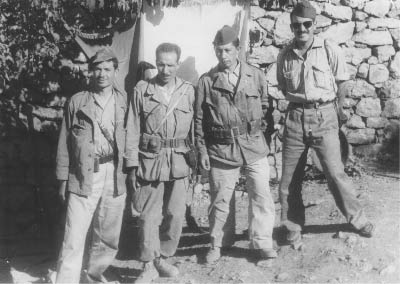
FLN leaders met secretly in the Soummam valley to unify the revolution under a national leadership, the Conseil National de la Révolution Algérienne. The congress subordinated military commanders to political authority and endorsed priority of the interior fronts. Rivalries established at Soummam later resurfaced in the post-independence power struggle within the FLN.
Location: Kabylia, Algeria
The Battle of Algiers

French paratroopers under General Jacques Massu were granted sweeping police powers to dismantle the FLN's urban bomb network in the Casbah. The campaign eliminated the FLN's Algiers cell within months, but the systematic use of torture against suspects, documented by victims such as Henri Alleg and later admitted by French officers, caused a lasting crisis in French public opinion. The episode became the paradigm of a pyrrhic counterinsurgency victory.
Location: Algiers, Algeria
The Question of Torture Goes Public
Publisher Jérôme Lindon released Henri Alleg's "La Question", a first-person account of torture by French paratroopers; it sold tens of thousands of copies within weeks before being seized by the authorities. Alongside the reports of the 1957 Wuillaume mission to the International Red Cross, the book forced the torture issue into the French parliament and press, splitting public opinion between those who condemned the practice and those who defended it as necessary against terrorism.
Location: Paris, France
May 13 and the Fall of the Fourth Republic
A settler-led uprising in Algiers, backed by army commanders threatening to invade metropolitan France, toppled the Fourth Republic. Charles de Gaulle returned to power on June 1 and the Fifth Republic was founded that autumn. De Gaulle initially held out hope of an "Algerian Algeria" tied to France, but in September 1959 he recognized the Algerians' right to self-determination, alienating the settlers and much of the army.
Location: Algiers, Algeria
The Week of the Barricades
European settlers and army loyalists rose in Algiers against de Gaulle's self-determination policy, raising barricades and briefly threatening a coup. The revolt collapsed within days when de Gaulle reaffirmed civilian authority and the army refused to back the insurgents. It was the first open split between the French state and its most intransigent supporters in Algeria.
Location: Algiers, Algeria
The Generals' Putsch
Four retired generals, led by Maurice Challe, seized power in Algiers and announced a military junta to keep Algeria French. The putsch collapsed within five days after de Gaulle invoked emergency powers and conscripts refused to follow the rebel officers. The failed coup drove hardline officers into the underground Organisation Armée Secrète (OAS), which launched a terror campaign against both Algerians and pro-peace French figures.
Location: Algiers, Algeria
The Évian Accords
French and FLN delegations signed a ceasefire recognizing Algeria's right to independence, with guarantees for the European minority. A March 19 ceasefire ended major fighting, but OAS terror continued, provoking reprisals and reprisal massacres against harkis, the Algerians who had served France.
Location: Évian-les-Bains, France
Independence

After a July 1 referendum in which Algerians voted overwhelmingly for independence (and a French referendum backed it), Algeria declared independence on July 5, the 132nd anniversary of the 1830 capture of Algiers. The summer saw the mass exodus of roughly 800,000 pieds-noirs to France and the killing of thousands of harkis by FLN forces. War death tolls remain contested, with common figures ranging from around 300,000 to more than a million in Algerian estimates.
Location: Algiers, Algeria