
Alan Turing -- Father of Theoretical Computer Science
Alan Mathison Turing (1912-1954) was an English mathematician, computer scientist, logician, and cryptanalyst who is widely regarded as the father of theoretical computer science. He formalized the concepts of algorithm and computation with the Turing machine, played a pivotal role in breaking the German Enigma code during World War II, and laid foundations for artificial intelligence. His tragic prosecution for homosexuality and his posthumous recognition make his story one of genius, service, and injustice.
Events
Alan Turing Born in London

Alan Mathison Turing is born in Maida Vale, London, to Julius Mathison Turing, a British civil servant in India, and Ethel Sara Stoney. He shows early signs of genius, teaching himself to read in three weeks and developing an intense interest in science and chess at Sherborne School, despite the school's emphasis on classics over science.
Turing Begins Studies at King's College, Cambridge

Turing enters King's College, Cambridge to study mathematics. He excels in his studies, winning a fellowship at age 22. At Cambridge, he is exposed to the foundational debates in mathematics, particularly Kurt Goedel's incompleteness theorems, which shape his thinking about computation and decidability.
Turing Publishes "On Computable Numbers" -- Birth of Computer Science

Turing publishes his seminal paper "On Computable Numbers, with an Application to the Entscheidungsproblem." He introduces the concept of a universal Turing machine -- a theoretical device that can compute any computable sequence -- and proves that there are problems that no algorithm can solve (the halting problem). This paper founds theoretical computer science.
Turing Earns PhD from Princeton University

Turing studies under Alonzo Church at Princeton University, earning his PhD with a dissertation on "Systems of Logic Based on Ordinals." He also designs an electromechanical cipher machine at Princeton. While in the United States, he is offered a position as John von Neumann's assistant but declines, choosing to return to Britain.
Turing Joins Bletchley Park to Break German Codes
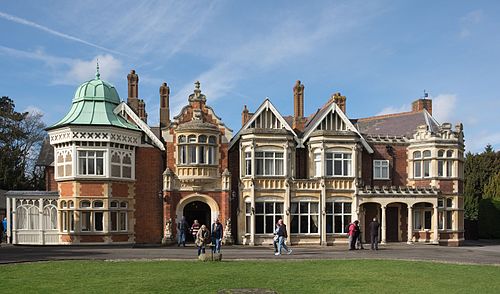
Days after Britain declares war on Germany, Turing reports to Bletchley Park, the Government Code and Cypher School. He becomes the leading figure in Hut 8, tasked with breaking the German naval Enigma cipher. The work is so secret that even his family does not know what he does during the war.
Turing Designs the Bombe to Decrypt Enigma Messages

Building on Polish pre-war work, Turing designs an electromechanical machine called the Bombe that rapidly tests possible Enigma rotor settings. The Bombe enables Bletchley Park to decrypt German communications at scale. Turing's work on the naval Enigma is particularly critical for the Battle of the Atlantic, allowing convoys to evade U-boats.
Turing Designs One of the First Stored-Program Computers

After the war, Turing proposes the Automatic Computing Engine (ACE), one of the earliest designs for a stored-program computer. His design anticipates many features of modern computers. The full ACE is never built by the National Physical Laboratory, but a smaller version, the Pilot ACE, operates in 1950 and becomes one of the fastest computers in the world.
Turing Publishes "Computing Machinery and Intelligence"
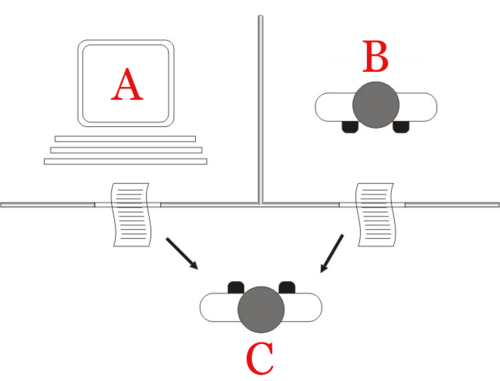
Turing publishes a paper in Mind that opens with the question "Can machines think?" He proposes an operational test for machine intelligence -- the "Imitation Game," later known as the Turing Test -- in which a human judge converses with a machine and a human, trying to distinguish them. The paper becomes foundational to artificial intelligence.
Turing Convicted for Gross Indecency; Forced to Choose Chemical Castration
After reporting a burglary, Turing is investigated and charged with gross indecency under British law for his homosexual relationship with Arnold Murray. He is convicted and given a choice: imprisonment or chemical castration (estrogen injections). He chooses the latter, which renders him impotent and causes breast development. His security clearance is revoked.
Turing Publishes Pioneering Work in Mathematical Biology
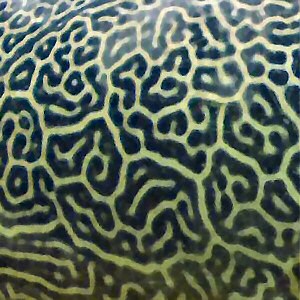
Turing publishes "The Chemical Basis of Morphogenesis," proposing a mathematical model of how patterns in nature -- from leopard spots to plant phyllotaxis -- emerge from chemical reactions. The paper pioneers the field of mathematical biology and correctly predicts oscillating chemical reactions (the Belousov-Zhabotinsky reaction), observed for the first time in the 1960s.
Turing Dies of Cyanide Poisoning at Age 41
Turing is found dead in his home in Wilmslow, Cheshire, from cyanide poisoning. The inquest rules the death as suicide, though some scholars have suggested accidental poisoning from his chemistry experiments. His body is cremated. Much of his wartime work remains classified for another 20 years, and the full magnitude of his contributions is not publicly known for decades.
Queen Elizabeth II Grants Turing a Posthumous Royal Pardon
After decades of campaigns and apologies (including a 2009 apology from Prime Minister Gordon Brown), Queen Elizabeth II grants Turing a posthumous royal pardon under the Royal Prerogative of Mercy. The pardon, the first ever granted under the Treason Act, symbolizes the belated recognition of Turing's service and the injustice of his conviction. Turing is now celebrated as one of Britain's greatest scientific minds.