
Akbar the Great — Third Mughal Emperor and Architect of Empire
Third emperor of the Mughal dynasty, who reigned from 1556 to 1605 and expanded the empire across much of the Indian subcontinent. A conqueror who also abolished the tax on non-Muslims, married into Rajput royal houses, sponsored interfaith debates at Fatehpur Sikri, and built the administrative system that sustained Mughal rule for a century and a half after him.
Events
Birth in Exile
Jalal-ud-din Muhammad was born at Amarkot fort in Sindh while his father Humayun, driven from Delhi by the Afghan ruler Sher Shah Suri, was a fugitive wandering the courts of Persia and Rajasthan. Akbar spent his childhood without formal literacy, later arranging for works to be read aloud to him — a practice that accompanied his lifelong curiosity across subjects from religion to metallurgy.
Location: Amarkot, Sindh
The Throne at Thirteen and the Second Battle of Panipat
Humayun died in January 1556 and Akbar was proclaimed emperor at Kalanaur at the age of thirteen, under the regency of Bairam Khan. Within months, Hemu, a Hindu general who had seized Delhi for the Afghan cause, was defeated and killed at the Second Battle of Panipat, securing Delhi and Agra for the Mughal dynasty and beginning its second — and permanent — era in India.
Location: Panipat, India
The Rajput Policy of Alliance
Taking full power after dismissing Bairam Khan in 1560, Akbar began a deliberate policy of conciliating the Rajput kingdoms rather than only conquering them. His 1562 marriage to a princess of Amber made the Kachhwaha dynasty of Jaipur a Mughal ally; other Rajput houses followed into high imperial service. Mewar, under Rana Pratap, refused — and was crushed after the sieges of Chittorgarh (1568) and Ranthambore (1569-70), sieges that ended in the killing of tens of thousands of defenders and civilians.
Location: Amber, India
Abolition of the Jizya
In 1564, Akbar abolished the jizya, the poll tax on non-Muslim subjects, and over the following years opened the highest civil and military offices of the empire to Hindus, Jains, and later Christians. The policy, later formalized as sulh-i-kul ("peace with all"), broke with the convention that an Islamic state's governing class must be Muslim, and drew opposition from conservative clerics throughout his reign.
Location: Fatehpur Sikri, India
Conquest of Gujarat and Bengal
Akbar personally led the conquest of Gujarat in 1572-73, giving the empire its first direct access to the sea and the port of Surat. Bengal was subdued by 1576 after the Battle of Rajmahal. With the empire spanning from Kabul to Bengal, Akbar's court grew into one of the wealthiest in the world, financing his new capital at Fatehpur Sikri.
Location: Surat, India
The Ibadat Khana Debates

Akbar built the Ibadat Khana (House of Worship) at his new capital, where from 1575 he hosted debates among Sunni, Shia, and later Hindu, Jain, Zoroastrian, and Jesuit scholars — three Jesuit missions from Goa were received at court. In 1579 he issued a declaration asserting his authority to decide religious disputes, a move that alarmed the Islamic clergy who saw it as placing the emperor above the ulema.
Location: Fatehpur Sikri, India
The Din-i-Ilahi
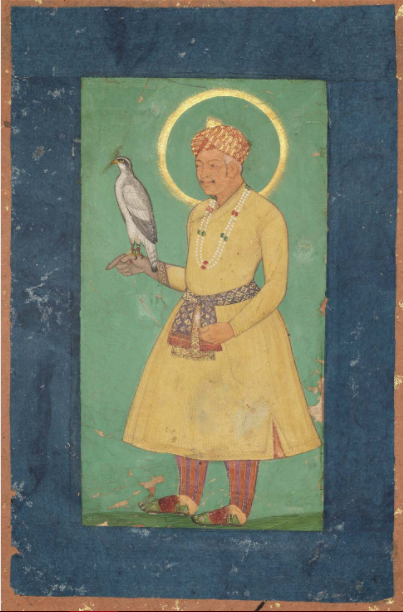
Out of the debates, Akbar proclaimed the Din-i-Ilahi in 1582, a syncretic ethical order drawing on Islam, Hinduism, Zoroastrianism, and Christianity, with himself at its head. Historians still debate whether it was a genuine attempt at a pluralist creed, a mechanism of court loyalty, or a royal intellectual project; it attracted only a small following, and by the reign of Aurangzeb it had vanished entirely.
Location: Fatehpur Sikri, India
Administrative Reform — Mansabdari and Land Revenue
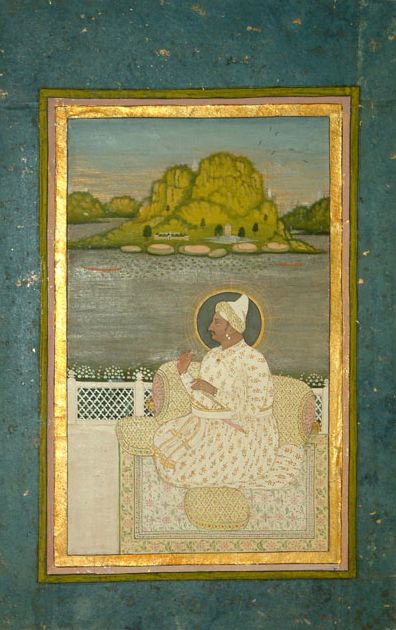
Akbar built the institutional core of the empire: the mansabdari system, which ranked every noble and military officer in a single graded hierarchy, and the dahsala land revenue settlement engineered by his finance minister Todar Mal, which standardized tax assessment on measured yields across the empire. Under these systems the Mughal economy roughly tripled in size, and the framework outlived Akbar by more than a century.
Location: Agra, India
Death and Succession

Akbar died on 27 October 1605 at Fatehpur Sikri, aged 63, after a reign of nearly half a century, and was buried at Sikandra near Agra. His son Jahangir succeeded him without a succession war — a rarity in Mughal history — inheriting the most populous and one of the wealthiest empires on earth.
Location: Fatehpur Sikri, India