
The Abbasid Caliphate — The Islamic Golden Age (750-1258)
The dynasty that moved the Islamic empire's capital to Baghdad, presided over a flourishing of science, philosophy, and commerce, and ended with the Mongol sack of the city.
Events
The Abbasid Revolution

Abu al-Abbas al-Saffah overthrew the Umayyad caliphate, founding the Abbasid dynasty with support from Persian converts and those discontented with Umayyad rule favoring Arab nobility. Abu Muslim's forces defeated the Umayyads at the Zab, and most of the ruling family was eliminated at a victory banquet.
Location: Kufa, Iraq
Baghdad Founded as the Round City

Caliph al-Mansur founded Baghdad as a round walled city on the Tigris, deliberately positioned between the Persian and Arab worlds at the crossroads of Eurasian trade. Within decades it became the largest city in the world outside China and the political and commercial heart of the empire.
Location: Baghdad, Iraq
Harun al-Rashid and the Imperial Peak
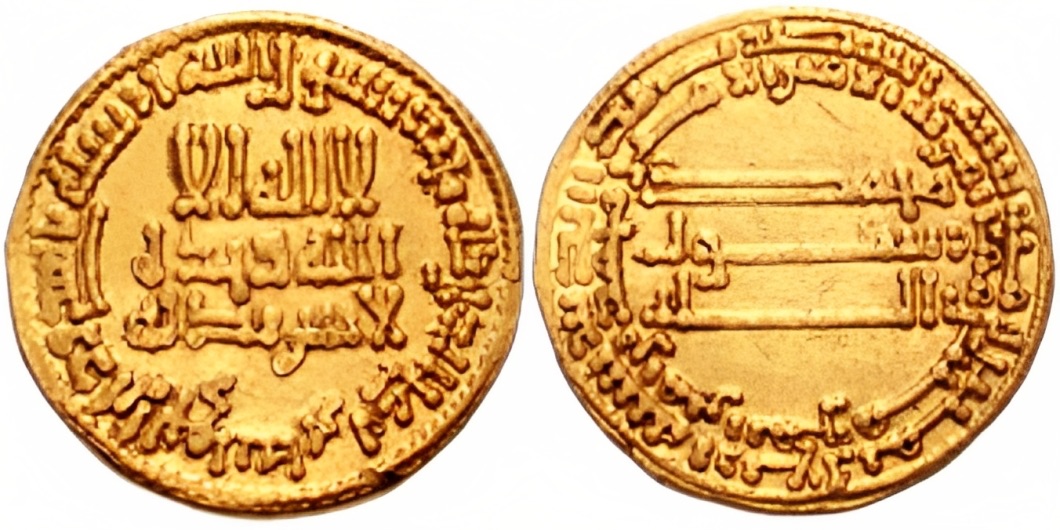
The reign of Harun al-Rashid (786-809) marked the empire's cultural and political zenith, celebrated later in the Thousand and One Nights. He maintained diplomatic missions to Charlemagne and the Tang court while territorial fragmentation and later civil war between his sons foreshadowed decline.
Location: Baghdad
Al-Khwarizmi and the Algebra of Inheritance

Muhammad ibn Musa al-Khwarizmi published his treatise on al-jabr (restoration), giving algebra its name and systematizing the solving of equations, partly to compute Islamic inheritance shares. His name, Latinized, became "algorithm" — one of many Golden Age contributions embedded in modern mathematics.
Location: Baghdad
The Translation Movement

Caliph al-Ma'mun founded the House of Wisdom, which institutionalized a translation movement rendering Greek, Persian, and Indian works of philosophy, medicine, mathematics, and astronomy into Arabic. This preservation and synthesis of classical knowledge fueled the Islamic Golden Age of science and scholarship.
Location: Baghdad
The Mihna Inquisition

Caliph al-Ma'mun, and his successors, instituted the mihna, a compulsory inquisition forcing officials and scholars, notably the jurist Ahmad ibn Hanbal, to profess the created nature of the Quran under Mu'tazilite rationalist doctrine. Its eventual abandonment by al-Mutawakkil in 848 marked a decisive turn against caliphal authority over religious doctrine.
Location: Baghdad
Al-Razi and Ibn Sina's Canon

The physician Ibn Sina completed the Canon of Medicine in 1025, synthesizing Galenic and Islamic medicine into the most influential medical textbook in history, taught in Europe into the 17th century. Alongside al-Razi's clinical writings, it cemented the Golden Age's centrality to world medicine.
Location: Persia
The Buyid and Seljuk Takeovers

After the Buwayhids took Baghdad in 945 and stripped the caliphate of military power, the Seljuk Turks under Tughril entered Baghdad in 1055 as the caliph's protectors, holding real power as sultans. The Abbasid caliphs retained religious authority, a split between spiritual and temporal power that defined the Islamic polity for centuries.
Location: Baghdad
The Mongol Sack of Baghdad

The Mongol army of Hulagu Khan captured Baghdad and executed Caliph al-Musta'sim, ending the Abbasid caliphate. The sack devastated the city, destroyed its libraries — accounts of the Tigris running black with ink belong to legend but reflect the scale of cultural loss — and closed the Islamic Golden Age.
Location: Baghdad