
The 1973 Oil Crisis
The Arab oil embargo and production cuts that followed the Yom Kippur War quadrupled world oil prices, ended the postwar era of cheap energy, and reshaped the global economy and energy policy.
Events
The Yom Kippur War Begins
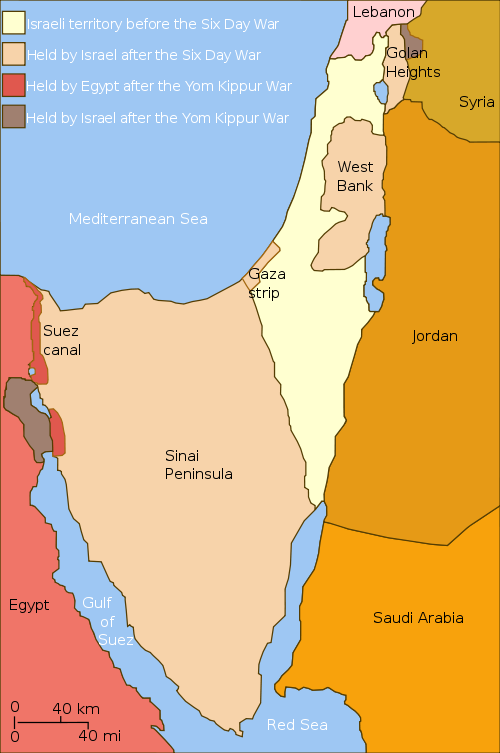
Egypt and Syria launched a surprise attack on Israeli-held territories on Yom Kippur, aiming to recover land lost in the Six-Day War. As the United States and other Western states resupplied Israel during the war, Arab oil producers prepared to use oil as a political instrument.
Location: Sinai Peninsula, Egypt
OAPEC Declares the Embargo
The Organization of Arab Petroleum Exporting Countries, led by Saudi King Faisal, announced an immediate 5 percent production cut with further monthly cuts planned, and an embargo on oil exports to the United States, the Netherlands, and other states that had supported Israel in the war. The producers framed the move as a response to the seizure and occupation of Arab territories and Western military support for Israel.
Location: Kuwait City, Kuwait
Prices Quadruple and the Embargo Widens

At successive OPEC negotiations in the weeks after the embargo, the posted price of crude oil rose from about 3 dollars to nearly 12 dollars per barrel, a nearly 300 percent increase. The embargo list grew to include Portugal, Rhodesia, and South Africa, and producer governments began taking equity stakes in Western oil concessions.
Location: Vienna, Austria
Gasoline Shortages in the United States

Gasoline lines formed across the United States as supplies tightened under existing price controls. Economists argued the controls, extended by President Nixon in August 1973, prevented prices from allocating scarce fuel and worsened the queues, while the administration pressed domestic producers and consumers to conserve and turned to rationing plans.
Location: United States
The 55 mph Speed Limit
President Nixon signed the Emergency Highway Energy Conservation Act, setting a national 55 miles per hour (89 km/h) speed limit to save fuel, and year-round daylight saving time followed. European states negotiated bilateral deals with Arab producers, and Japan began shifting its Middle East diplomacy toward the Arab position to protect supplies.
Location: United States
The Embargo Is Lifted
Arab oil ministers, meeting in Vienna, agreed to lift the embargo after diplomacy following the disengagement agreements between Israel, Egypt, and Syria, but production prices did not return to earlier levels. The structural shift in oil pricing power from Western oil companies to producer governments proved permanent.
Location: Vienna, Austria
The International Energy Agency
Consumer nations created the International Energy Agency to coordinate energy security, emergency oil sharing, and conservation policy in response to the shock. The United States established the Strategic Petroleum Reserve in 1975, and many states launched nuclear power and efficiency programs.
Location: Paris, France
Economic Aftershocks
The oil shock helped trigger the 1973-75 recession and a combination of inflation and stagnation that confounded postwar Keynesian policy, in Britain compounding the industrial unrest that produced the three-day week. Japanese automakers gained major US market share with fuel-efficient cars as American manufacturers, heavily invested in large vehicles, struggled to respond.
Location: United States
A Decade of Shocks
The 1973 crisis became known as the first oil shock, followed by the second oil shock after the Iranian Revolution of 1979. Together they ended the era of cheap energy that had underpinned postwar growth, permanently raised consumer-nation attention to Middle East politics, and redirected global investment into efficiency, nuclear power, and later renewable energy.
Location: Global