
The 1948 Arab-Israeli War (1947-1949)
The founding war of the Arab-Israeli conflict, fought between the new State of Israel and the armies of five Arab states from May 1948 to March 1949. It established Israel's borders until 1967, displaced hundreds of thousands of Palestinians and an comparable number of Jews from Arab countries, and created refugee and territorial disputes that remain unresolved.
Events
The UN Partition Plan

The UN General Assembly passed Resolution 181, proposing to divide Mandatory Palestine into independent Jewish and Arab states with Jerusalem under international administration. The Jewish leadership accepted the plan with reservations; the Arab states and the Palestinian Arab leadership rejected it as unjust, arguing the proposed Jewish state held a large Arab minority and more land than its population proportion. The vote set the stage for the war to follow.
Location: New York, USA
Civil War Under the Mandate

As British withdrawal approached, fighting escalated between Jewish and Arab forces. On 9 April, Irgun and Lehi fighters killed around 100 villagers at Deir Yassin; the atrocity was broadcast by both sides and accelerated Palestinian flight from mixed areas. By early May, several hundred thousand Palestinians had already left or been expelled from their homes, and Jerusalem's Jewish quarter had fallen to Arab forces.
Location: Mandatory Palestine
Israel Declares Independence; Arab Armies Intervene

David Ben-Gurion declared the State of Israel on 14 May 1948 as the British Mandate expired. The next day, forces from Egypt, Transjordan, Syria, and Iraq, joined by expeditionary contingents from Lebanon and other Arab states, entered Palestine; their stated aim was to restore order and prevent the partition's implementation on behalf of the Arab majority. Israeli forces were initially outnumbered and outgunned, but the Arab armies fought without unified command, and Transjordan's Arab Legion acted largely to secure the areas designated for the Arab state rather than to destroy Israel.
Location: Tel Aviv and Mandatory Palestine
The First Truce and Count Bernadotte's Mediation
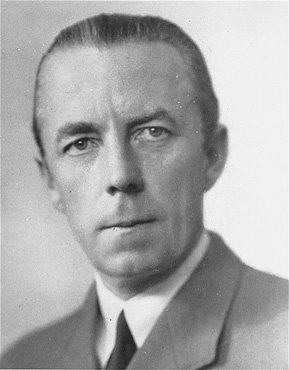
A UN-brokered truce arranged by mediator Count Folke Bernadotte took effect on 11 June. Both sides used the pause to rearm despite an arms embargo, Israel consolidating its forces under the new unified Israel Defense Forces. Bernadotte's proposals, which would have redrawn borders and limited Jewish immigration, were rejected by both sides. The truce collapsed on 8 July into renewed fighting.
Location: Mandatory Palestine
The Expulsion from Lydda and Ramle

In the offensives that followed the first truce, Israeli forces captured the twin towns of Lydda and Ramle on the road to Jerusalem. Roughly 50,000 to 70,000 inhabitants were expelled on military orders and marched eastward toward Arab lines. The expulsions became one of the largest single displacements of the war and a central episode in the Palestinian refugee crisis.
Location: Lydda and Ramle, Mandatory Palestine
The Assassination of Count Bernadotte

Count Folke Bernadotte, the UN's first official mediator in the conflict, was assassinated in Israeli-controlled Jerusalem by Lehi (Stern Group) fighters. The Israeli government responded by disbanding the Lehi organization and arresting its leaders. His successor, American diplomat Ralph Bunche, continued the mediation that would produce the 1949 armistices and receive the 1950 Nobel Peace Prize.
Location: Jerusalem
UN Resolution 194 and the Refugee Question
The UN General Assembly passed Resolution 194, which established the UN Palestine Conciliation Commission and stated that refugees wishing to return to their homes and live at peace should be permitted to do so at the earliest practicable date, with compensation for those choosing not to return. The resolution's meaning became one of the most contested texts in the conflict; Arab states emphasized the right of return, Israel emphasized the qualifier and resettlement. The resulting refugee population, numbering around 700,000, was placed under UNRWA, created separately in 1949.
Location: Paris, France
Armistice at Rhodes
Israel and Egypt signed the first of the war's armistice agreements on 24 February 1949, negotiated at Rhodes under acting mediator Ralph Bunche. Lebanon followed in March, Transjordan in April, and Syria in July; Iraq withdrew its forces without signing. The agreements drew the lines that would hold until 1967, with Egypt holding the Gaza Strip and Transjordan annexing the West Bank, while no Palestinian state emerged.
Location: Rhodes, Greece
The Ink Flag at Eilat and the War's End
Israeli forces captured Umm Rashrash on the Red Sea, raising a hand-drawn flag in a photograph that became the war's closing image. Israel held roughly 78 percent of the former Mandate's territory, well beyond the partition plan's allocation, while the Gaza Strip and the West Bank came under Egyptian and Jordanian control. Around 700,000 Palestinians were refugees, and a comparable number of Jews left, fled, or were expelled from Arab countries over the following years, most settling in Israel.
Location: Umm Rashrash (Eilat), Israel